

Roadblocks: The Real Reason Men Are Depressed
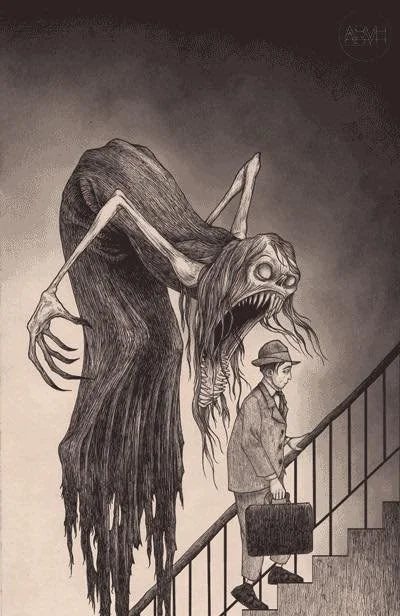
These arguments are all - I should point out - my own. They’re my experiences and my personal opinions based on those experiences. If you or someone you know has experienced an entirely different series of events, by all means pop me a message and let me know: I’m always interested in the opposing view.
Image Copyright/Attribution: ARVH
Depression is widely considered the not-so-silent killer of men in a certain age/demographic. I’m sure it’s equally destructive for women in a similar category, especially with additional factors like the perimenopause thrown into the mix: that’s a beast. However, I’m going to focus on something I have a lot of experience with, and therefore I hope the following blog post makes you feel less alone.
I know an awful lot of men currently suffering from a particular form of creeping, life-draining depression. On balance, I know far more unhappy men than unhappy women. Don’t get me wrong, I know a lot of unhappy women who are unhappy as a direct result of the men in their lives…but - generally speaking - I know a lot of unhappy men who are struggling but putting on a mask to continue functioning. Invariably, this is due to some sort of career setback or disappointment that has led to the onset of chronic low self-esteem.
I’ve heard these roadblocks described as lots of different things over the years…one of the best descriptions I’ve heard was a guy who told me that it’s like that feeling you get when you’re reading a really engrossing novel that draws you in and makes you feel a part of it when you suddenly hit a page full of typos and are reminded that it IS a novel…and after that you’re just reading a book.
For men, it’s the upward trajectory: a career path, a sports challenge, a winning streak, a physical or mental odyssey, a series of competitions, the lifelong collection of a fanatical treasure seeker.
Then comes the point on that climb up the mountain when you fall. The career break, the job loss, the fall on the tennis court that ends your career, the first major loss on a lucky streak, the failure of the test, the narrow pass that doesn’t award the right points, losing the competition, seeing another guy run off with all the treasure.
This seems to be the breaking point for so many men…and leads to the suffering of SO many partners. The one thing that doesn’t seem documented anywhere near enough is the solution - if there is one - for the downward trajectory. Men DO feel pressure - the pressure to succeed…and, sadly, it’s not a choice - and it’s not an excuse - and it’s certainly not conjured or imagined. It’s the death of ambition and the death of the spirit.
The current solutions aren’t working: low-level counselling and buckets of antidepressants handed out like Smarties (occasionally on the first visit to a GP) are not answers to the downward trajectory: if anything, they’re worrying distractions…like someone throwing you a punctured armband while you’re at sea and in danger of drowning.
The first time I went to the doctor and said I was suffering from feelings of despair - after years as a kid feeling invisible and useless - I was given six sessions of counselling and offered Citalopram. I know someone who, more recently, went to a doctor with the same concerns and was immediately offered Fluoxetine (and no offer of counselling in any form whatsoever).
Having spent many years in both counselling and psychotherapy, what I can say is that the initial mental ‘collapse’ when you’re a man who hits that barrier is too severe for a ‘critical friend’ to fix. Counselling is - at its heart - a mirror where you sit in a room effectively trying to fix ‘yourself’ as you’re facing someone who is only able to use elements of paraphrasing and reflection without any real challenge involved: it’s why so many of us feel counselling isn’t quite enough. Psychotherapy is marginally better and does at least offer some level of challenge. Comments you make in one session are often logged and referred to in later sessions to offer you some form of defence against your own particular ‘Enemy Within’.
I am a specific case: I had a childhood where - through no fault of my friends/family - I felt largely unlovable, invisible and - at best - second-rate. This continued into my adolescence and adulthood and wasn’t even noticeably dimmed when I became, very briefly, the highest paid author on the planet. Imposter Syndrome is real: the bigger the light, the more of an imposter you feel.
So what does work to lift the darkness? What can be used to quieten the negative voice? For me: physical exertion, cold therapy, freezing showers, breath holds of 1-3 minutes under the celebrated (and rightly so) Wim Hof Tutorials. Distraction also works: any port in a storm. PLAY that game - but not to death. HAVE that drink - but not excess. Do what you need to do in the moment to survive. You will always get judgment for every questionable choice you make, and there will ALWAYS be a price. Occasionally, it’s a price you need to pay in order to keep your sanity.
I would be interested to hear from both men and women who have had experiences different from the ones I’m describing above…and also from those who have genuinely found a different way to face or fight their demons.
