

My History With Fighting Fantasy
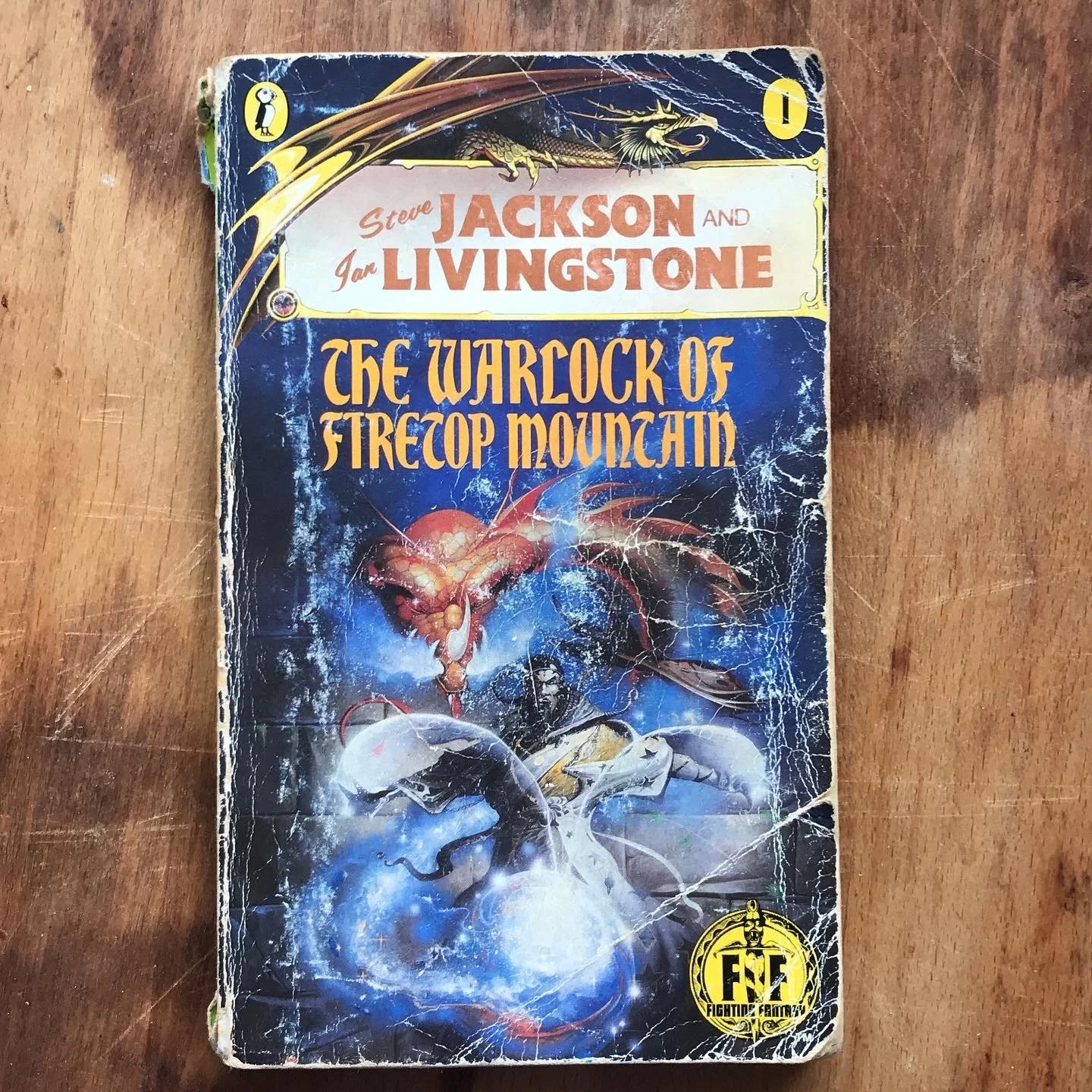
The Warlock of Firetop Mountain by Steve Jackson and Ian Livingstone. Cover illustration by Peter Andrew Jones and internals by Russ Nicholson (who was, interestingly, once an art lecturer at Thanet College).
1988
I’m ten years old and staying in my best friend’s summerhouse one weekend while his dad attempts to do up my battered old BMX bike. Late that evening, before we drop off to sleep and after we’ve exhausted the subjects of girls, Garbage Pail Kids cards and bike stuff, we get bored and go hunting through his brother’s room in search of something cool to do: we find a bunch of Fighting Fantasy books and read through Crypt of the Sorcerer together. My best mate finds the whole thing a bit meh and quickly turns the adventure into an imagined quest through a typical school day… but I’m hooked and determined to find out who Steve Jackson and Ian Livingstone actually are. Over the next few days, I play through Trial of Champions, House of Hell and Midnight Rogue, which is when I get super inquisitive and start to dig into this incredible series of books. I also discovered Games Workshop (the fantasy roleplaying company that Steve and Ian own to promote, develop and distribute the hobby that started in the USA with Dungeons & Dragons). Keep in mind that, up until this point, I’ve never read a book: not from start to finish - books are something that interests OTHER people, not me. I’m into bikes, arcade games, girls (yes, even at ten) and Garbage Pail Kids cards. Suddenly, there are these books, and I’m LIVING inside them. It’s at this point that I really start to hone in on the small group of Fighting Fantasy books that will consume my entire brain over the next year. These include The Warlock of Firetop Mountain (Steve and Ian), Citadel of Chaos (Steve), Midnight Rogue (Graeme Davis), House of Hell (Steve) and Trial of Champions (Ian). To this day, they remain five of my favourite books on the planet, and the replay value I’ve had out of each one has been incredible. It’s worth explaining here that I’m a creature constructed almost entirely of nostalgia: I replay computer games like The Secret of Monkey Island (1991) and Eye of the Beholder (1991) every year simply BECAUSE they hold such great memories for me of the time I spent on them when I was growing up. They never disappoint - and neither do the Fighting Fantasy books.
1989
I begin to get seriously into fantasy roleplaying games like D&D, Runequest and - eventually - board games like Heroquest (MB) and Advanced Heroquest (Games Workshop). However, once again, I start with Fighting Fantasy and start to get my friends to roll up characters for Dungeoneer (the FF version of D&D written by Marc Gascoigne and Pete Tamlyn).
1992
My devotion to Fighting Fantasy - and that part of my childhood - ends in 1992 on a trip to WHSmith when the price of Return To Firetop Mountain (the 50th title) is raised by a pound and exceeds my pocket money allowance: I’m forced to look around for an alternative book costing under £3 and happen upon Eric by Terry Pratchett (something that - arguably - changes the entire course of my life).
1994
I write a fantasy novel called ‘Skullsong’ set in the Fighting Fantasy universe and send it to Steve Jackson at The Abandon Art gallery in Richmond. Steve writes back and tells me that Skullsong would have been a solid potential addition to the FF novel series, but that the entire line has just been cancelled by Penguin Books. The novel goes back into the drawer.
1997
My first professional short story sells to Souvenir Press and Orbit Books in the international anthology Knights of Madness, alongside stories from Terry Pratchett and Tom Sharpe. I immediately wrote to Steve and Ian to tell them about it and to thank them for getting me into books in the first place.
1999
I’m taken on as an author by Ed Victor Ltd, the agents of my hero, Douglas Adams. I’m still playing Warlock of Firetop Mountain as I’m in reception there, waiting to meet my future agent (Sophie Hicks). While all this is going on, I’m working at Blockbuster Video in Ramsgate as a customer service assistant.
2002
My books sell around the world in a deal that makes publishing history at the time. They sell to Disney in the USA, to Hodder in the UK and to Sony, BBC Worldwide, Buena Vista and countless other publishers around the world. In a crazy year, I’m on every TV talk show in the UK, and the BBC hired Robert Llewellyn (Kryten in Red Dwarf) to read the audiobooks from my novels. Ultimately, the series doesn’t sell, and I will have to wait a good few years for books like Gladiator Boy and Undead to get me into the bestseller lists.
2022
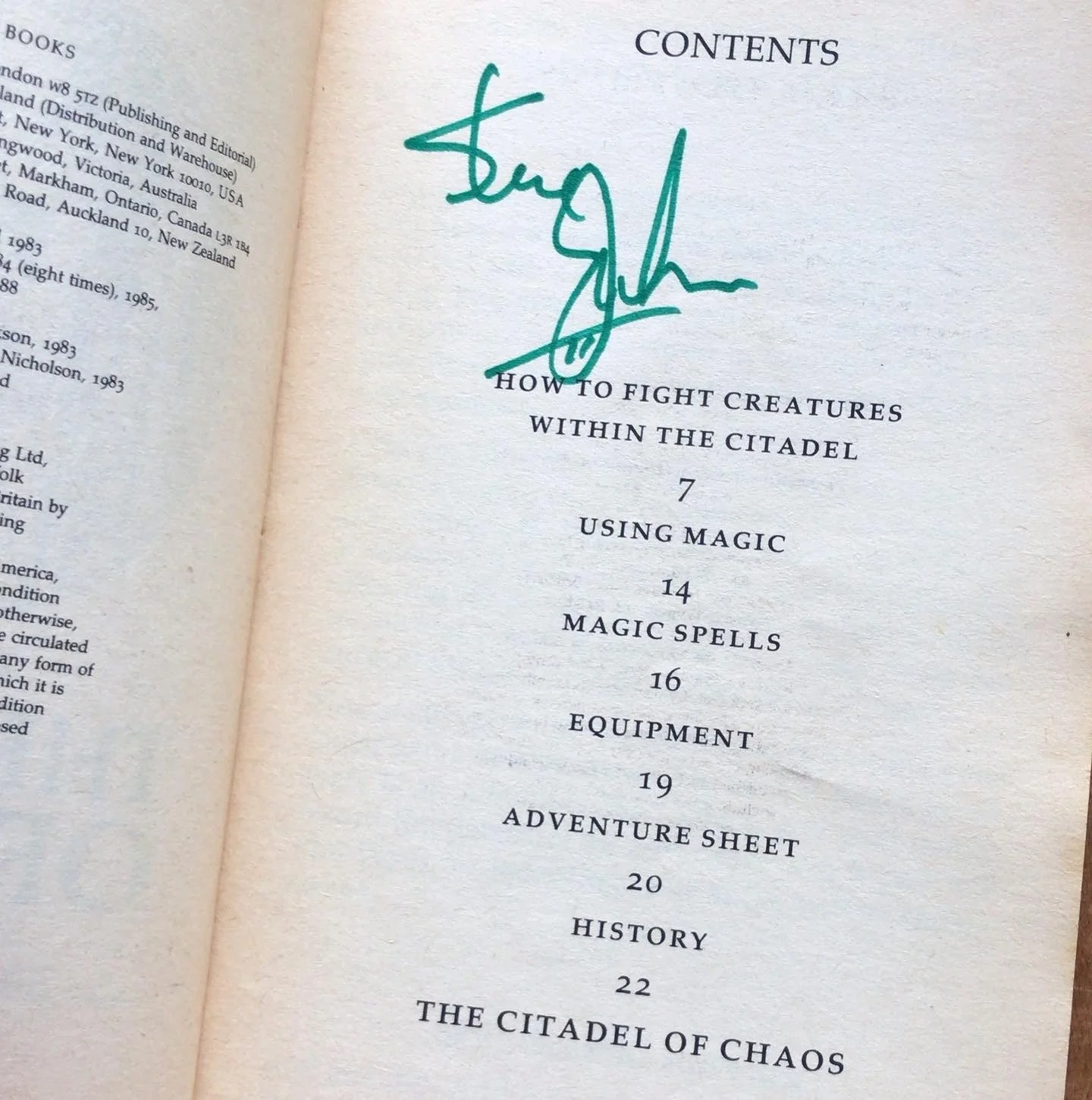
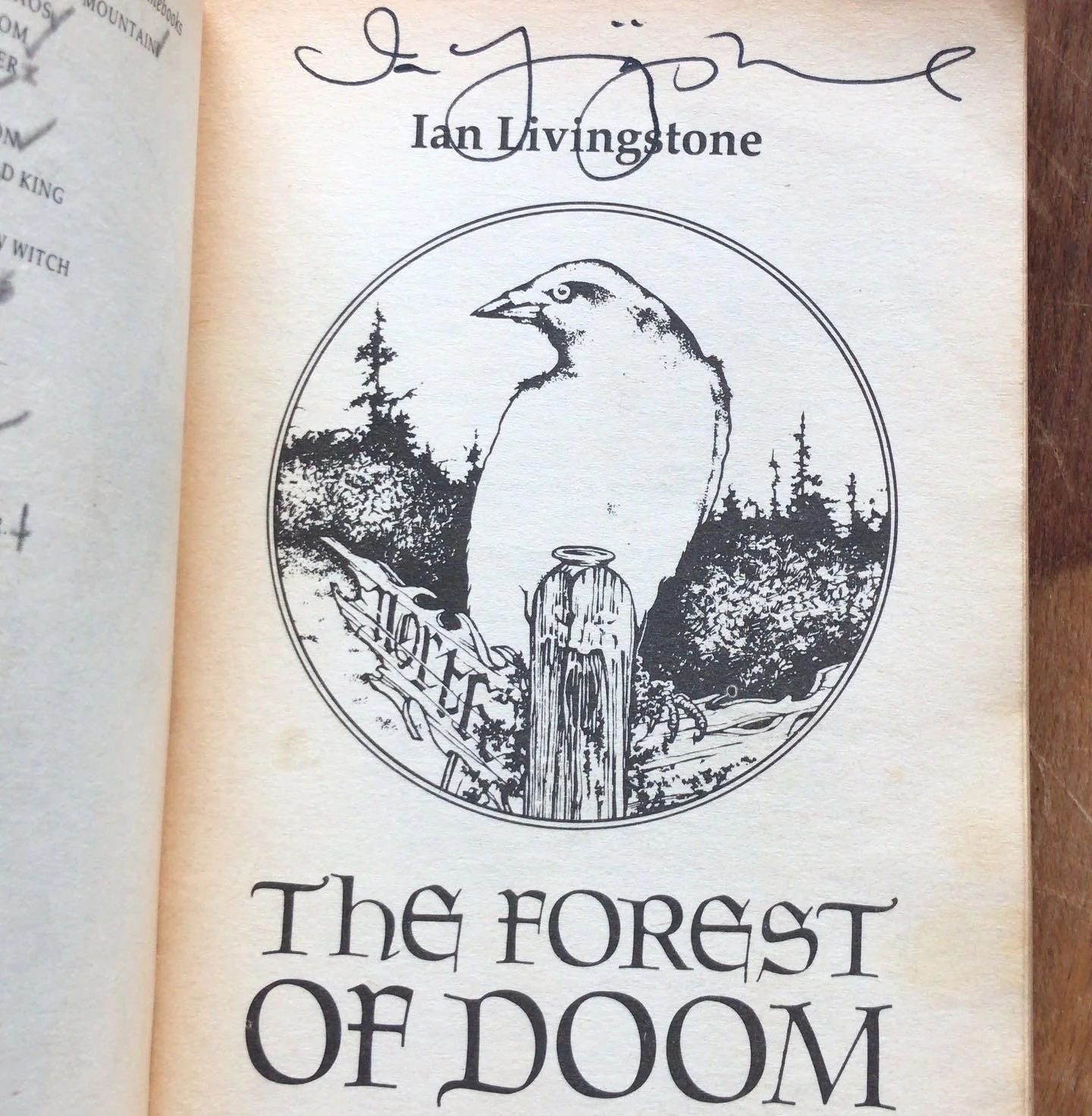
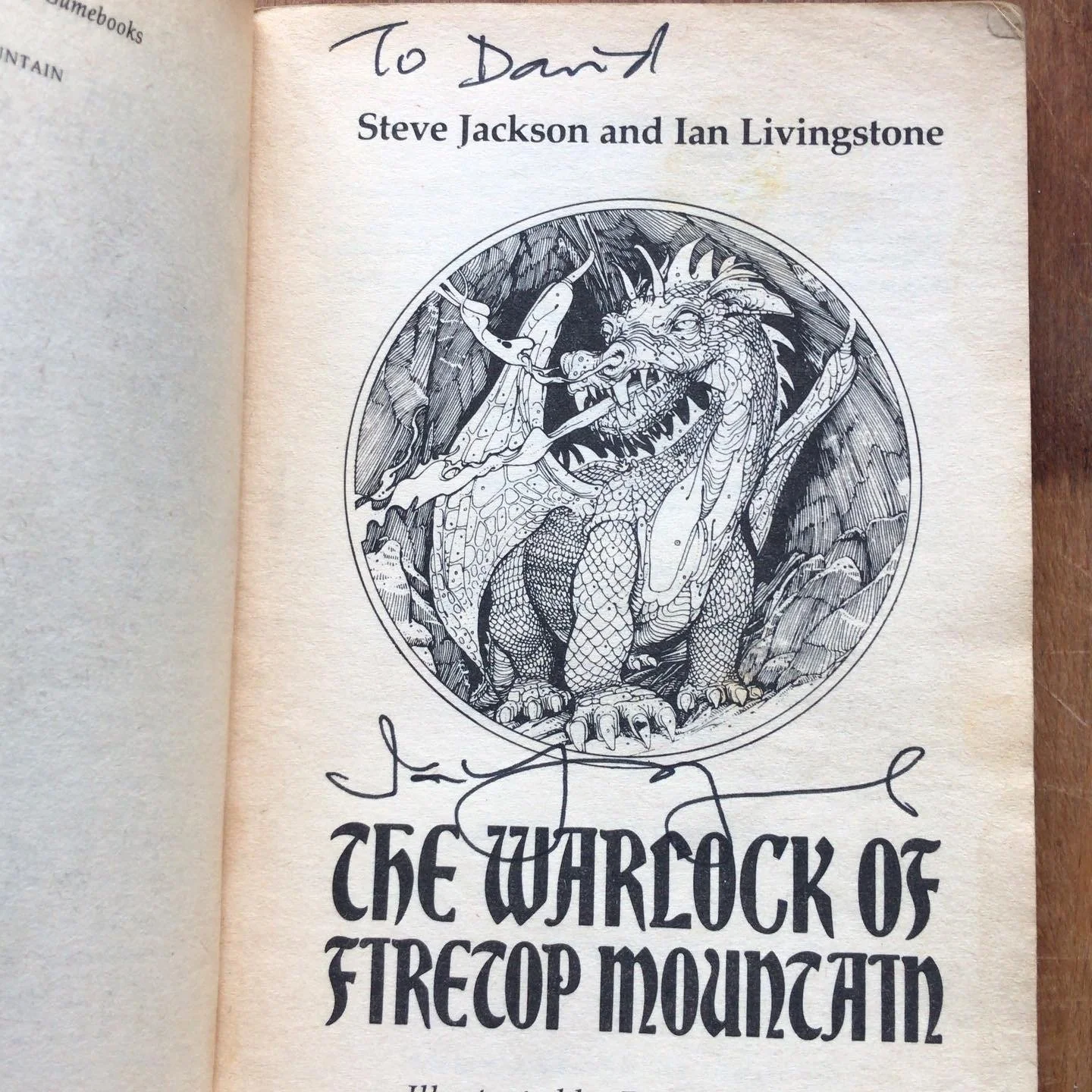
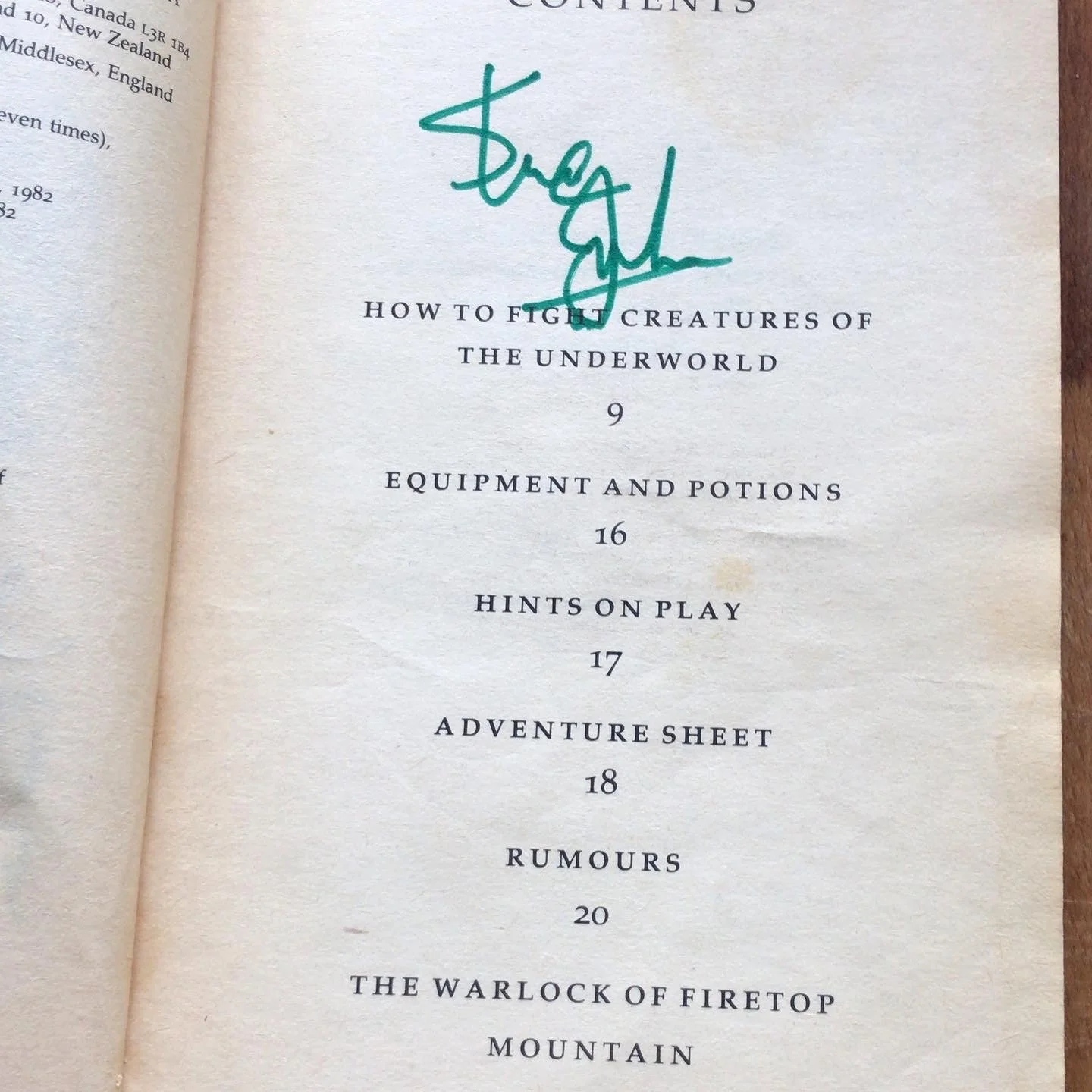
I go to my first Fighting Fantasy convention with my son (Fighting Fantasy Fest 4). It’s an odd experience for me, as I tend to avoid meeting my heroes for the very reasons you’d expect…and because I struggle hugely to connect with people on any sort of temporary or contrived basis (the ADHD and autistic spectrum stuff is a nightmare for this). My son enjoys the event, but he’s not a devoted fan, so he has no problem browsing the stalls and listening to the talks for what they are…but I’m too steeped in history and pressure to really ‘absorb’ the experience. I meet Steve and Ian to get books signed, but there’s only so much you can express in terms of how much of an impact someone has had on your life and it’s difficult to do that while you’re in any sort of queue (my diagnosis a year ago now explains why a queue feels to me like a ticking time bomb of pressure…whether I’m in front of or behind someone else). Nevertheless, I get to purchase the two new Fighting Fantasy titles, Shadow of the Giants and Secrets of Salamonis, two books that make me feel like a kid again and two games I literally can’t wait to play on the train home.
2022
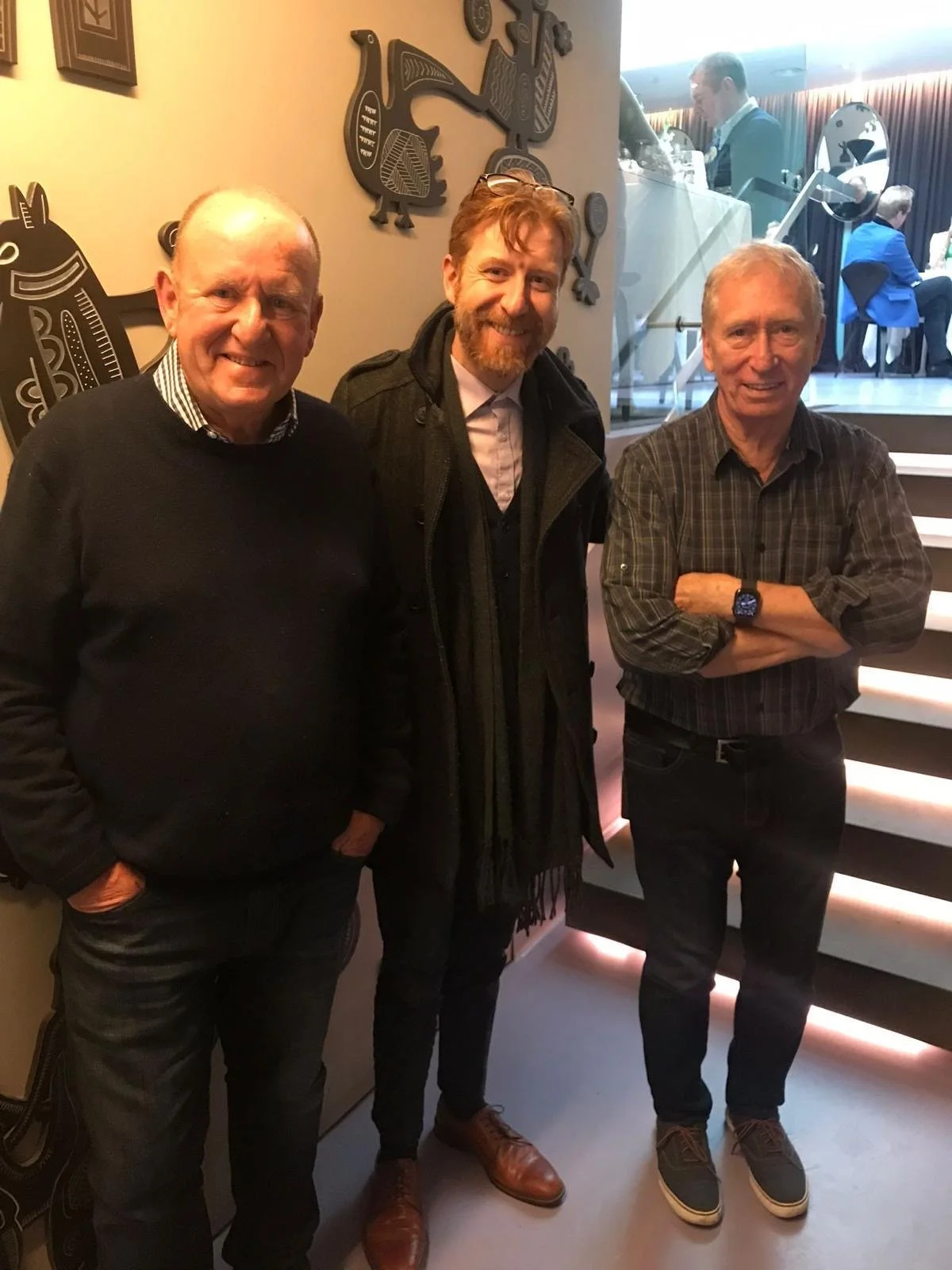
Then comes a very different experience: the launch dinner for Dice Men in London. Dice Men (the inside history of Games Workshop) is a book by Ian that I decided to back on Kickstarter at a high level because the top backers get to have lunch with the creators. It’s an incredible day, and I finally get to sit down with Steve Jackson and Ian Livingstone (and a bunch of equally lovely and very similar folks) to talk about all things Games Workshop and Fighting Fantasy. During the meal, Ian tells me I should get Disney to make the Illmoor movie, which I explain is like getting a dark god to answer your prayers and probably requires some sort of ritual sacrifice: having this kind of conversation feels surreal…as I’d far rather see a movie adaptation of Warlock, Trial or The Trolltooth Wars!
2026
Ian writes ‘Tomb of the Golden Skull’, the second book in as many years (following The Dungeon on Blood Island). Look at this cover by Karl Kopisnki!
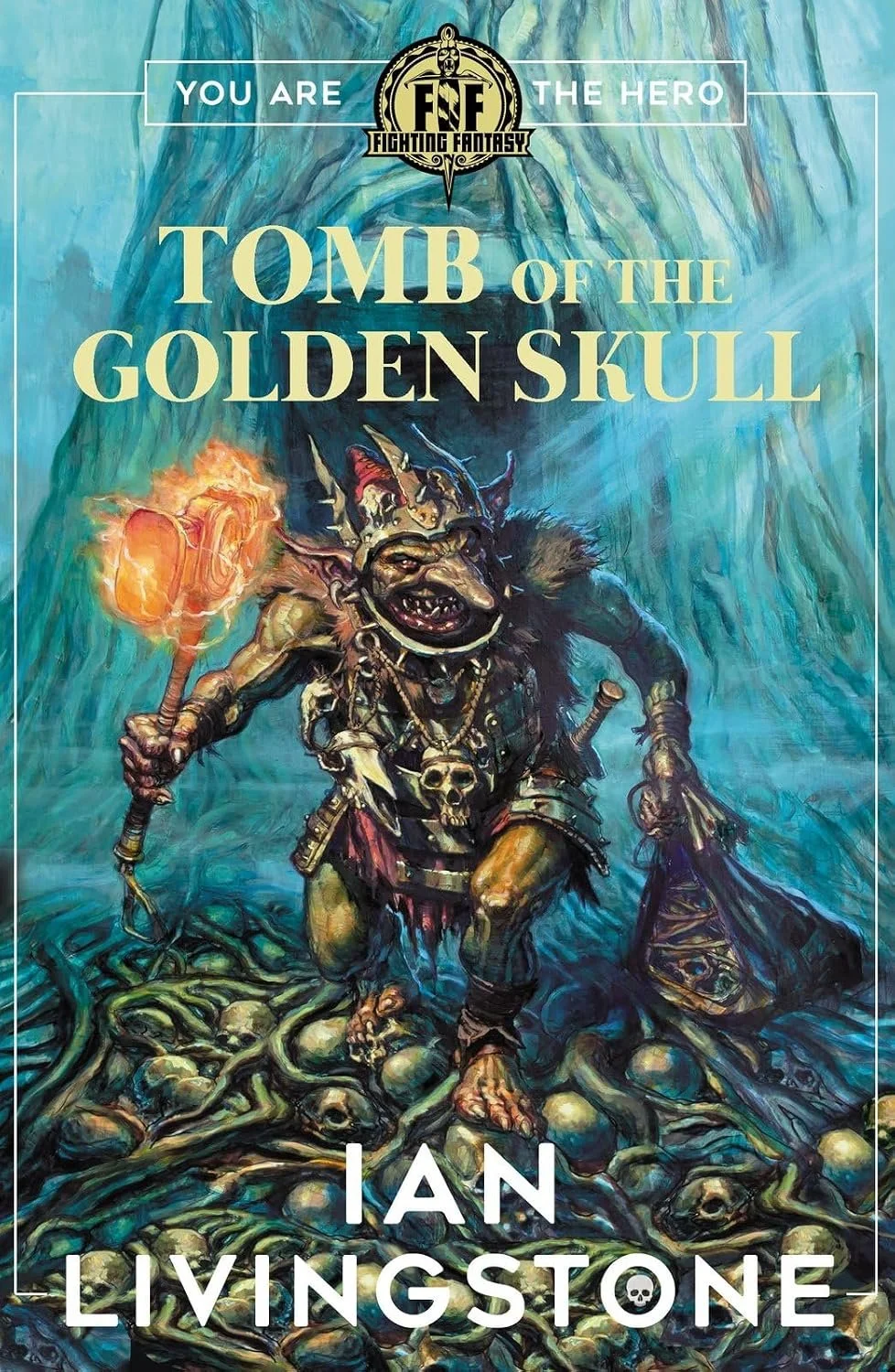
I particularly love the way they’ve managed to keep the art as ‘dangerous’ as it ever was.
My Favourite Fighting Fantasy Gamebooks (and a few notable exceptions)
The Warlock of Firetop Mountain by Steve Jackson and Ian Livingstone (1982)
The book I replay again and again. There was something about the combination of Ian and Steve as writers that makes this one the greatest of all FF gamebooks…and not simply because it was the first. The tests, the encounters, the numbered keys, the infuriating Maze of Zagor, the final battle with the warlock himself. It just all works so beautifully as a game: bags of atmosphere, too.
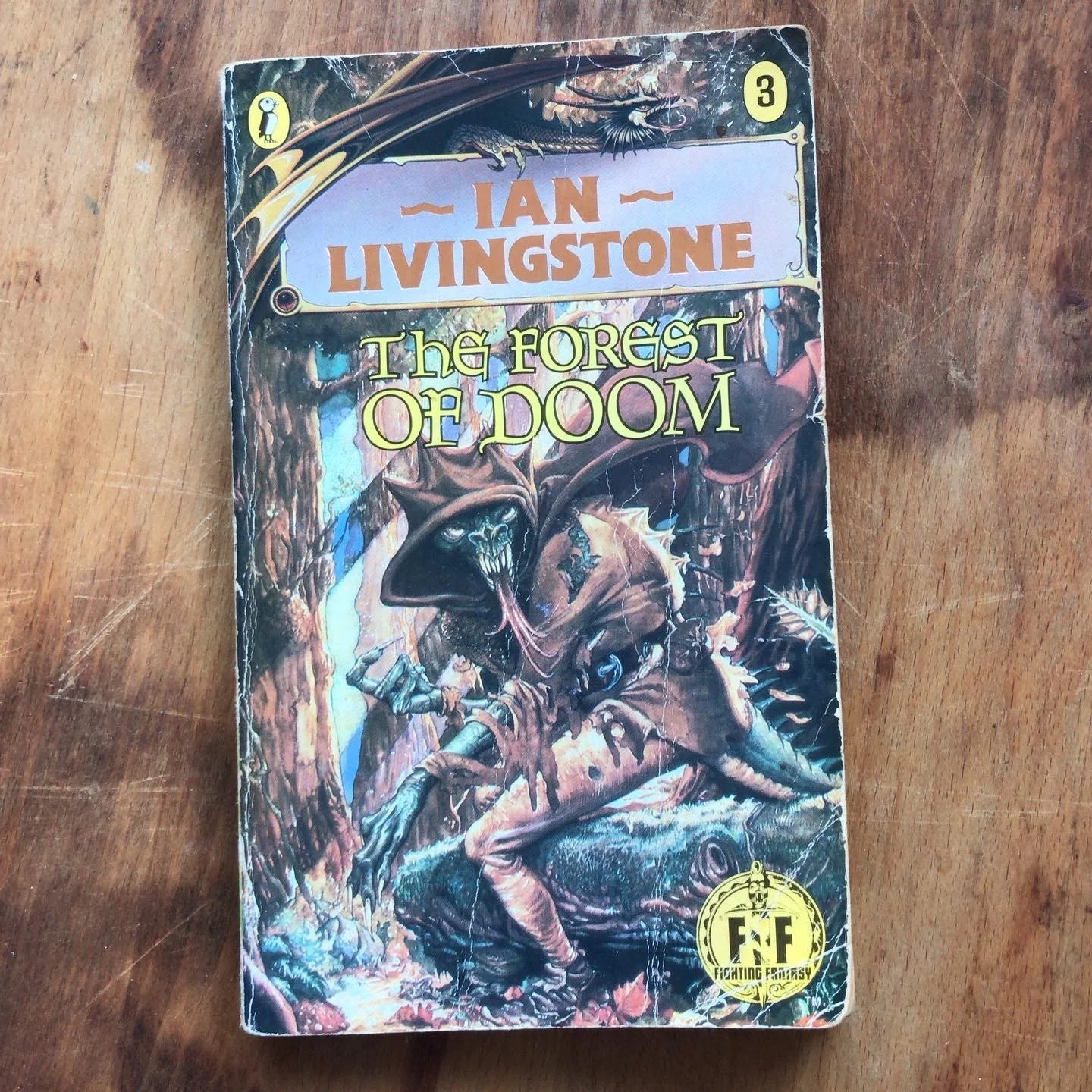
The Forest of Doom by Ian Livingstone (1983)
I don’t think many of us fans could argue that it’s really the cover that dragged us all into The Forest of Doom. The quest for the fabled dwarven hammer snatched by a pair of looting goblins felt like a completely fresh take on dungeoneering (as both Steve and Ian were experimenting with different environments: mountains, castles, cities, forests, etc. So many items to buy…and so little money. Loved it!
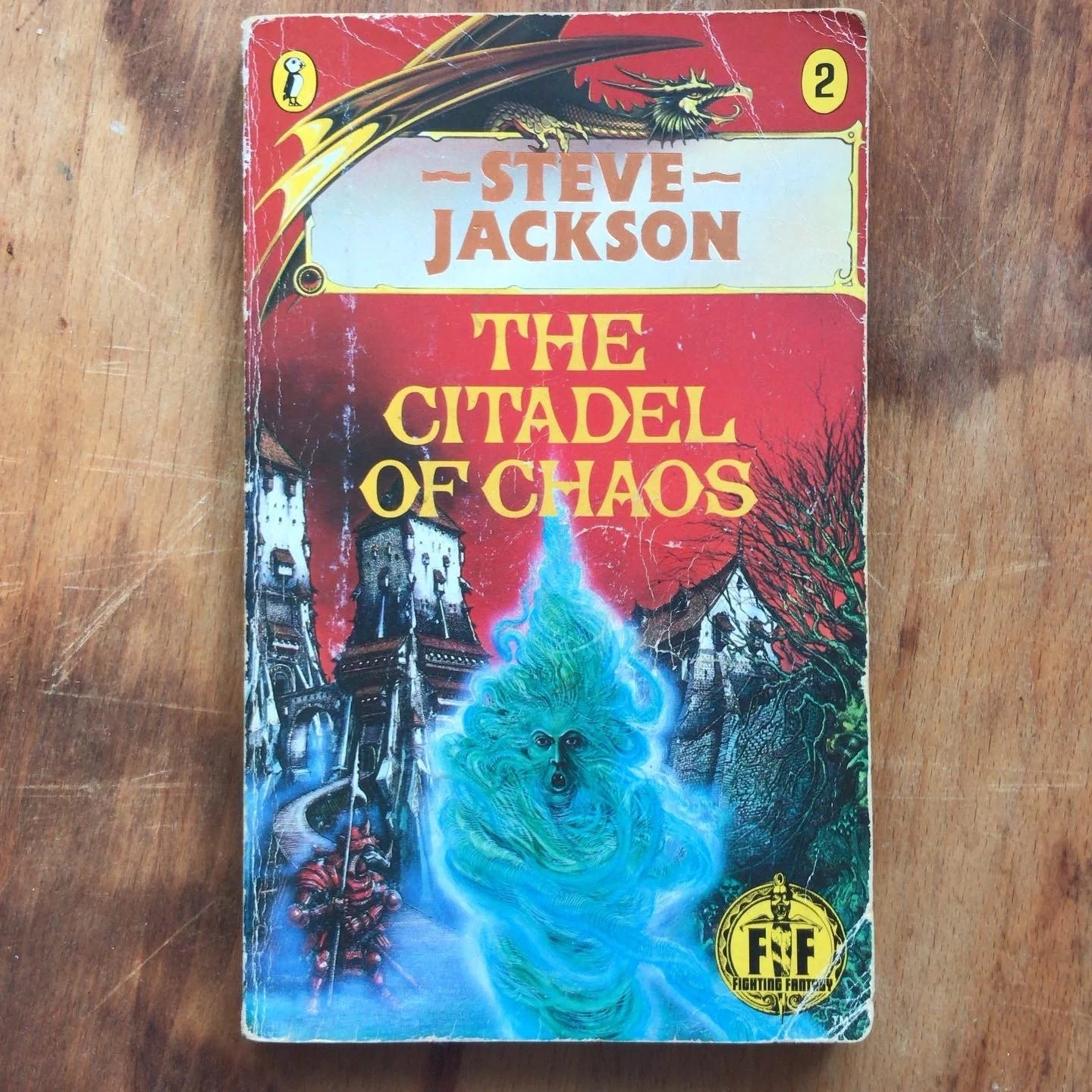
The Citadel of Chaos by Steve Jackson (1983)
There’s so much atmosphere in this one, and I’ve recognised over the years that the thing that makes it special is that you effectively play an interloper in forbidden territory on what’s basically an assassination mission. The introduction of magic and an absolutely unmissable final battle that felt epic to me as a kid complete a pretty immersive experience. Fabulous.
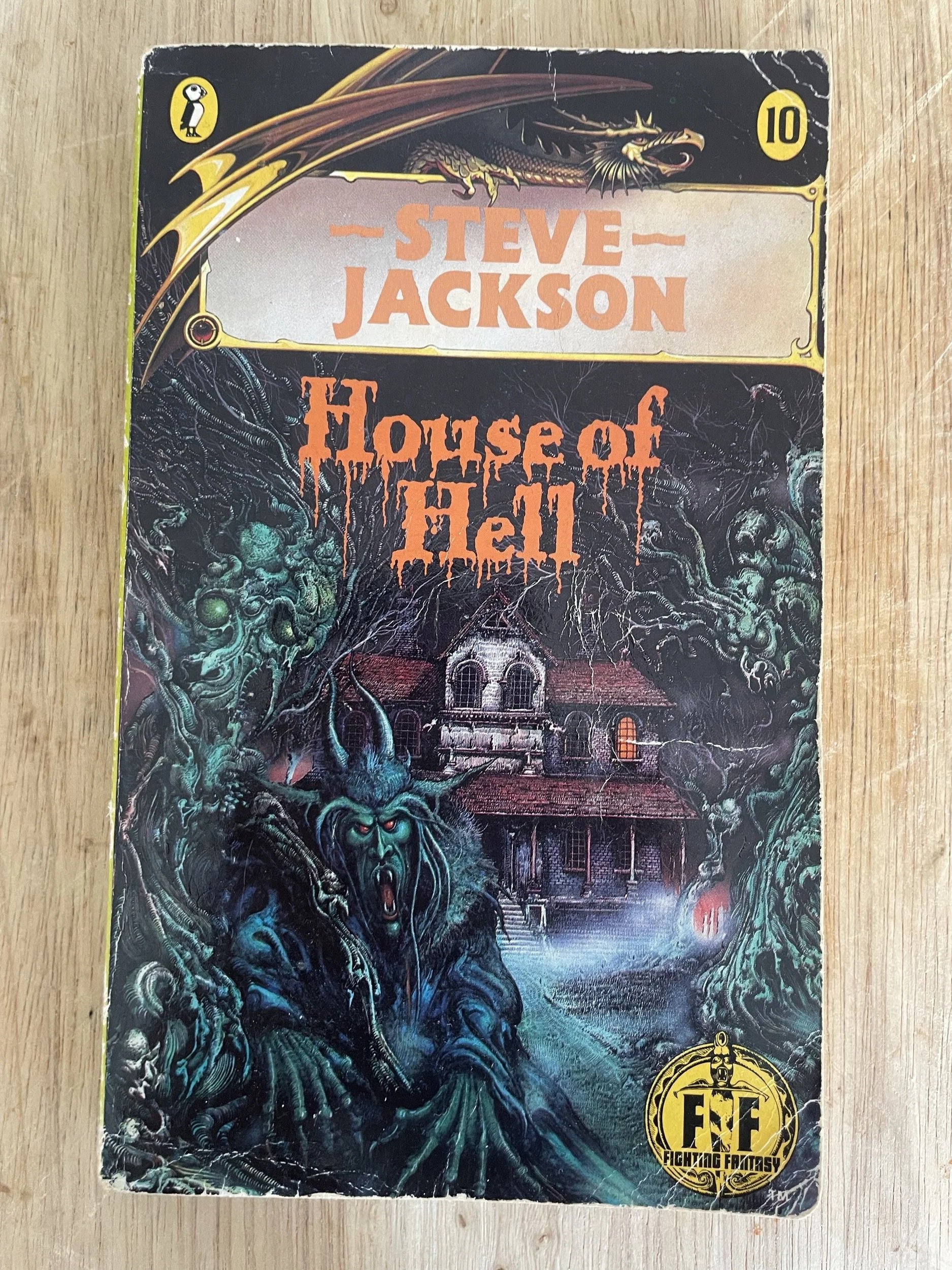
House of Hell by Steve Jackson (1984)
After Warlock, I’d say I play House of Hell more than any other Fighting Fantasy book simply because it’s such a standalone title. I can immerse myself in this one immediately, making it my go-to book for train journeys or hotel stays. I’ve even outraged people in restaurants by hurling dice across the table while I’m waiting for the food to be delivered (they don’t mind so much at Pizza Express, but they REALLY hate it at The Ivy).
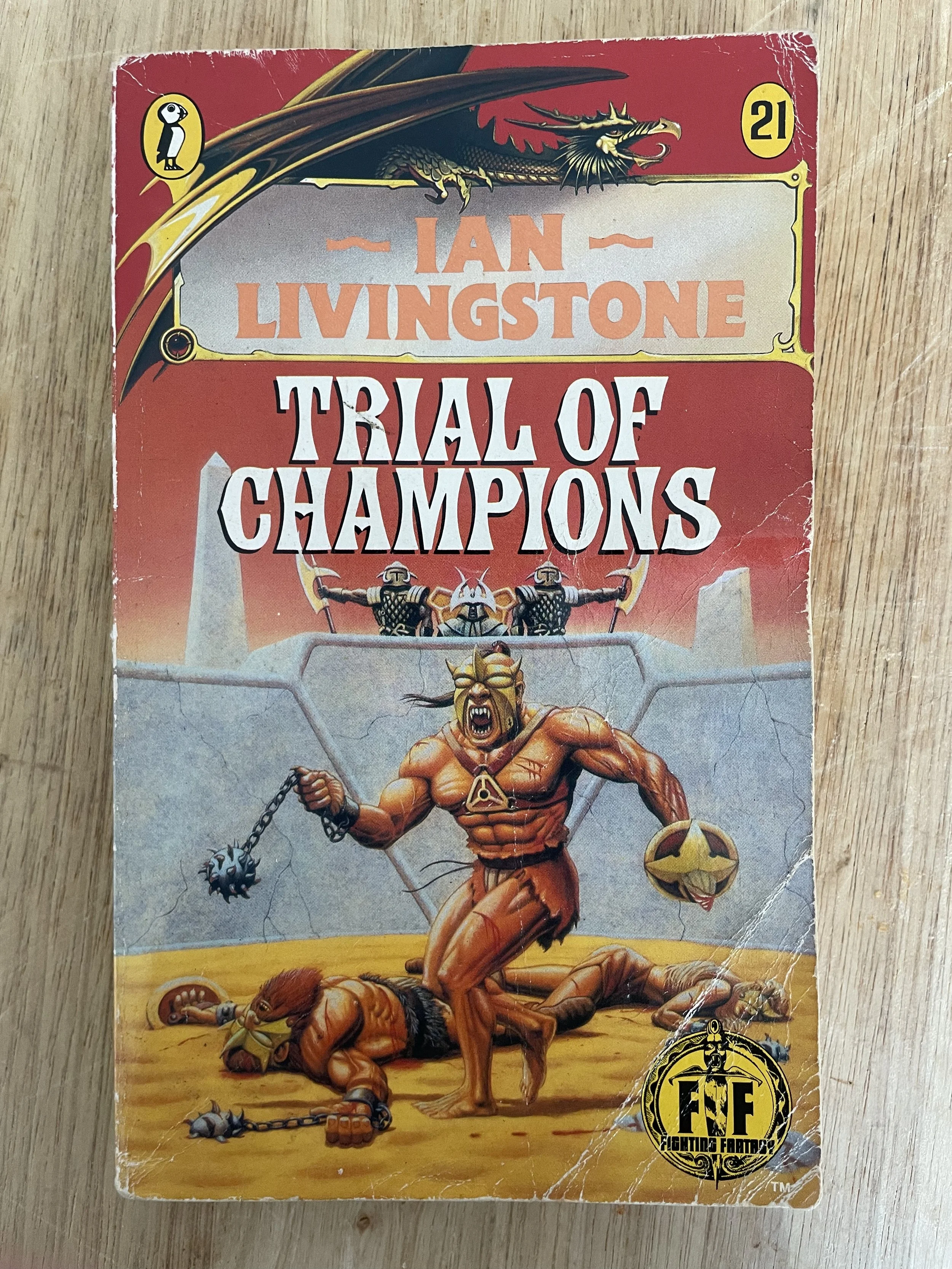
Trial of Champions (1986)
The book I always hold up as a favourite (if not THE favourite) simply due to the amount of time I spent in the dungeon as a kid. Whenever I had a day off from school, you can bet your bottom dollar I was playing Trial of Champions. I have literally lost count of how many times over the years that I’ve opened a door to see that accursed witch cackling at me or tried to beat Noy, the world’s most irritating trialmaster. I loved the gladiatorial contest in the first part of the book, and the dungeon absolutely came alive for me in this adventure. Completely unmissable.
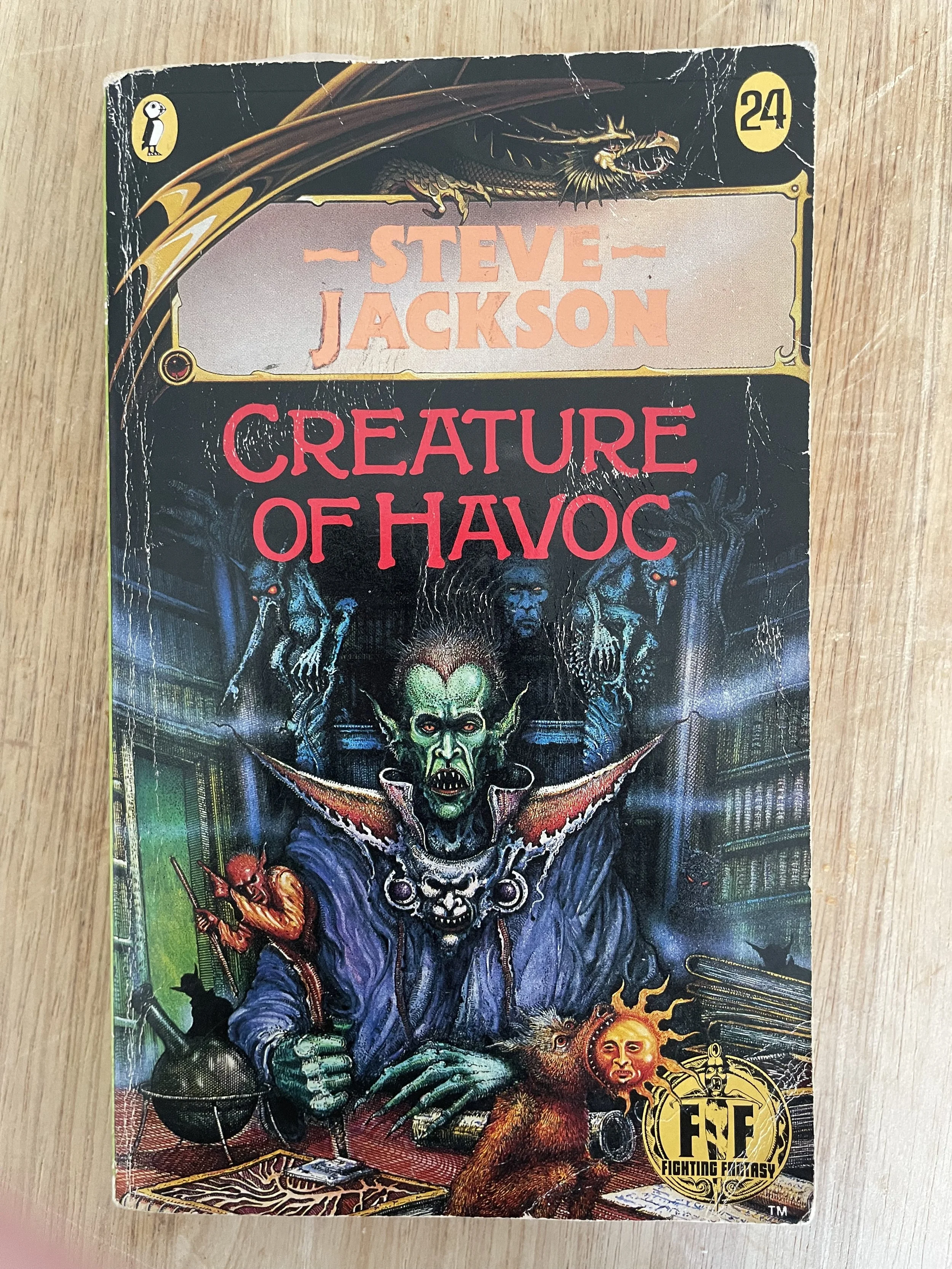
Creature of Havoc by Steve Jackson (1986)
For the longest time during my childhood, I thought that there was something wrong with either me or this book: possibly both. Nowadays, I can look at it for what it is - Steve Jackson indulging his habit of breaking new ground with either fiendish puzzles or equally bold diversions (Steve didn’t like to repeat himself much in terms of gamebook settings or style: he moved quickly into SF, horror and superhero games before devising his own reverse plotting (you playing the villain, effectively). To say this book is difficult would be a huge understatement - but it also has the most incredible cover (and enemy) of the entire series.
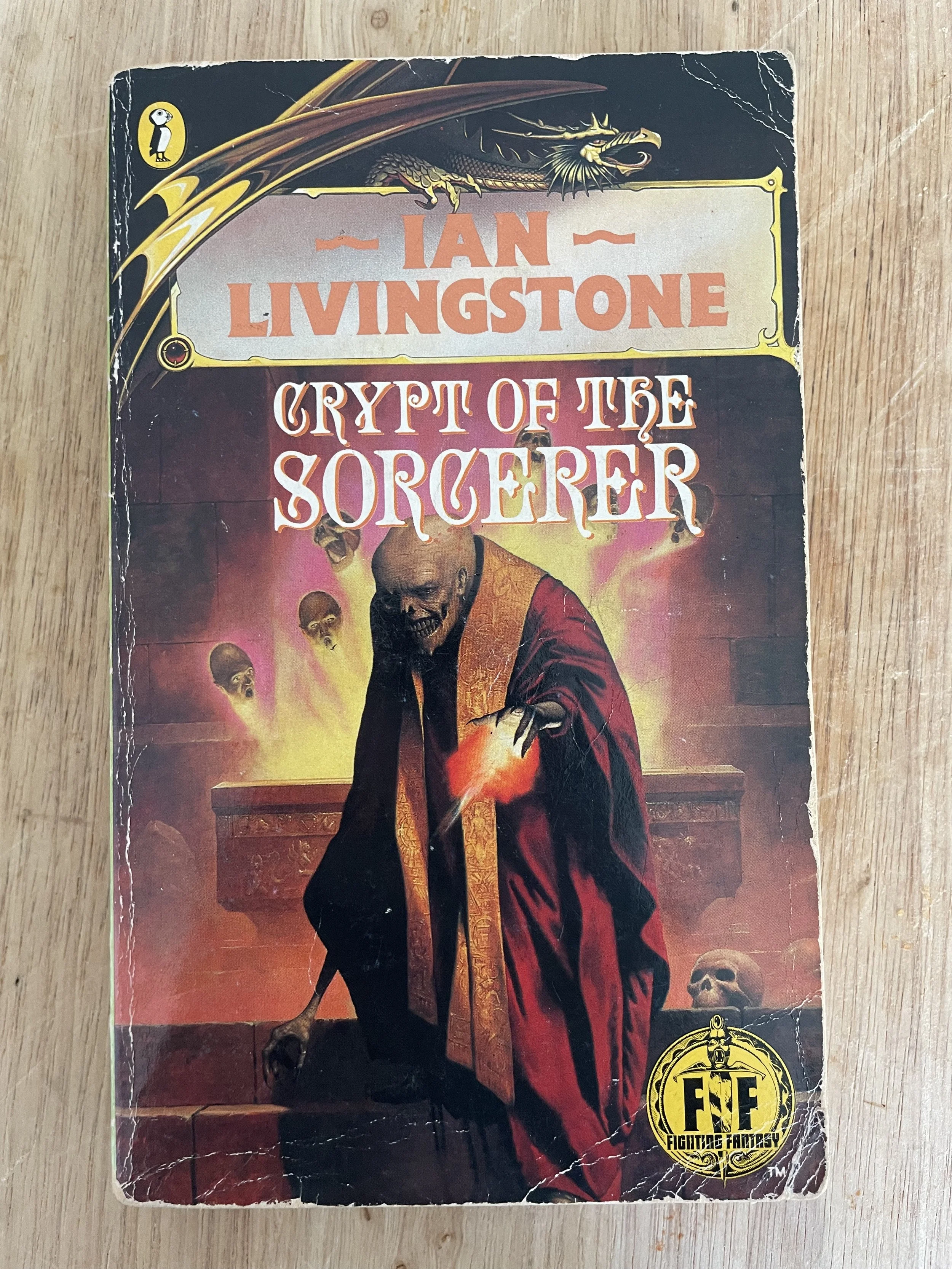
Crypt of the Sorcerer by Ian Livingstone (1987)
I think I’ve chosen this one purely because it was the first book we ever found and therefore technically my first ‘taste’ of Fighting Fantasy as a series. An evil fiend of an enemy at the end and the difficulty level make this particualrly memorable. If Creature of Havoc is the most difficult book in the series to complete in terms of the mental challenge it offers then Crypt is the most difficult in terms of the stats you require and the number of potential deaths and traps you need to surive in order to win. It’s often mentioned that you need really high stats in many of Ian’s books to stand even the most remote chance of victoy: this applies to Crypt of the Sorcerer (in spades).
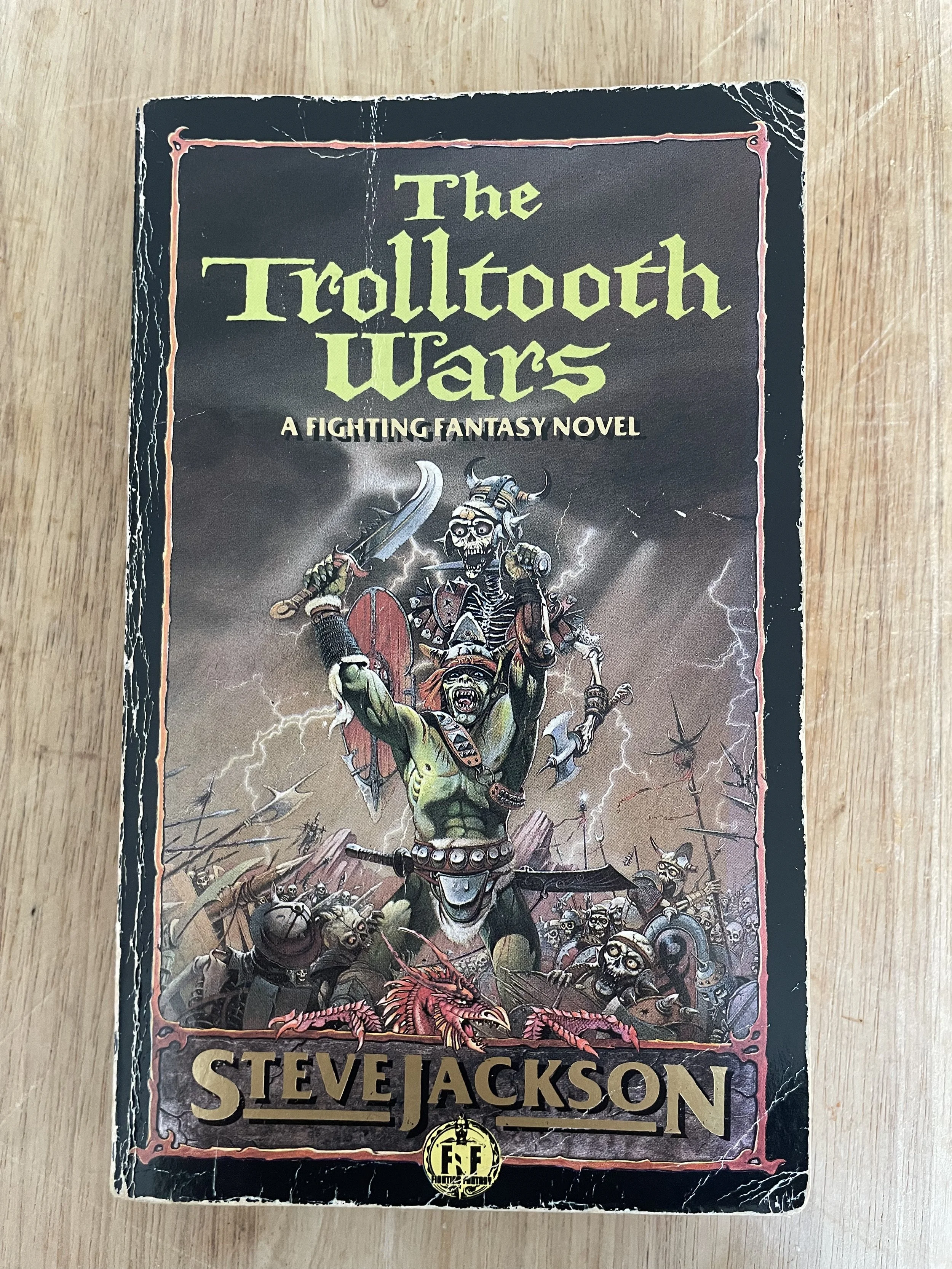
The Trolltooth Wars by Steve Jackson (1989)
The first Fighting Fantasy novel is still my favourite of the three that were written. Following on from the amazing background text Steve created for the intro of Creature of Havoc (another great reason to play that book), it really fleshes out the narrative around my favourite FF villains of all time: The Demonic Three (the sorcerer, Balthus Dire, Zagor: The Warlock of Firetop Mountain and the necromancer, Zharradan Marr.)
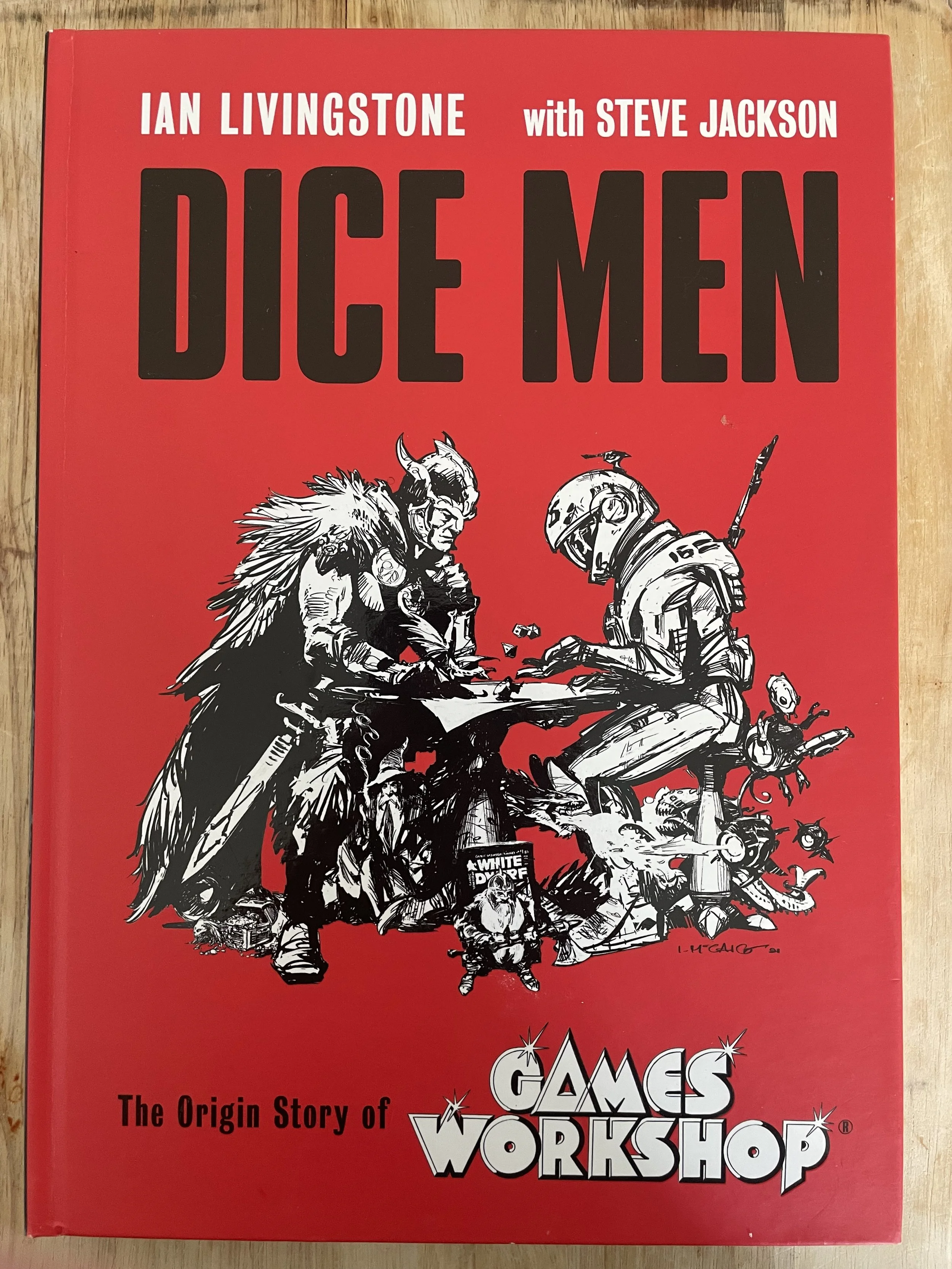
Dice Men isn’t actually a Fighting Fantasy book…but in many ways it documents the greatest adventure Steve and Ian ever shared: the building of a fantasy empire. If you have a strong interest in how D&D really ‘arrived’ in the UK and how Games Workshop was formed, then Dice Men is the book for you. Personally, I thought it was fabulously engrossing, and I couldn’t put it down.
