

Flashbacks
If you look back through your life, you'll quickly realise that certain selected memories have a power that seems to go beyond mere nostalgia. So many of those memories will involve things that have had a huge influence on who you are and the way in which you view the world. When I look back on my own childhood, it's very obvious to me that I felt different from other kids my age: not necessarily worse than everyone else and certainly not better, but in a very real sense...apart.
Nowadays, I can look at things like the ADHD diagnosis (an ASD one is also firmly expected) and think 'ah, crap...that was probably it', but having the knowledge now doesn't really cover how different I felt at the time. It wasn't that most boys my age were into football or even that so many of the street kids I hung around with loved to play stuff like manhunt or climb trees while I preferred to move as little as possible - it was more that they seemed to have things they genuinely loved to do and I didn't.
Don't get me wrong: I loved cartoons like He-Man and the Masters of the Universe, Action Force and Dungeons & Dragons, and I specifically recall my mum buying me He-Man figures like Trap Jaw from Carousel's Toy Shop in Ramsgate (where Crustie's Bakery stands now). I definitely remember at least one trip to Toys R Us in Chatham - a place that seemed half a world away from my home town - to get the super rare Sgt. Slammer Tank in the Action Force range (it was the only way you could get the Slammer/Slaughter figure, as he wasn't sold separately). Nevertheless, there was nothing among these interests and acquisitions that became an actual fixation.
Then I discovered Garbage Pail Kids. I can't remember exactly when I bought my first pack of those weird little cards, but I can honestly put my hand on my heart and say that I went completely bananas over them. One thing a lot of kids who are now recognised as being 'on the spectrum' have in common is an obsession with numbers, the order of things and cataloguing. I can honestly look back now and see how crazy it was that I was a dedicated collector of Panini Football Sticker Albums despite not having the least bit of interest in either the game or the players.
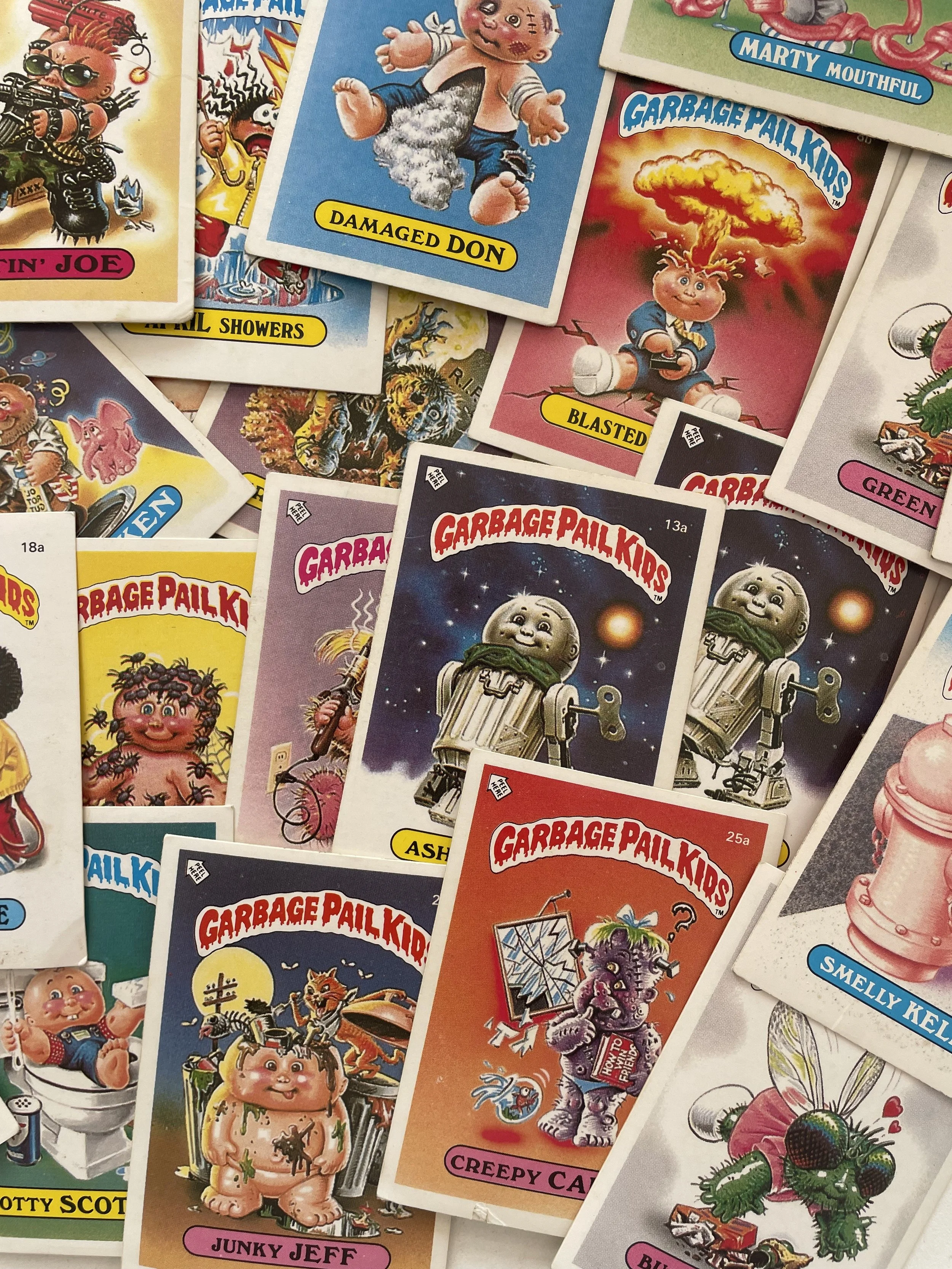
Garbage Pail Kids cards were different: each one was numbered and had two variations, and you bought the packs 'blind' and never knew what you were definitely going to get aside from a stick of chewing gum. I've written an entire post on GPK (here), but these were just a gift from the gods as far as I was concerned.
It was around this time that I made my first significant male friend, Clive, who had a huge impact on my life in two quite unpredictable ways. Clive was one of the tougher kids at school and loved his BMX bike - in pretty much no time at all, he'd got me into biking as a major weekend activity, and we spent mountains of time learning jumps and tricks and haring up and down Salisbury Avenue. Clive's dad took my sad old BMX and converted it into a gleaming speed machine in silver and purple. It was also Clive who got me to take more of an interest in the opposite sex, as we liked a lot of the same girls at school. However, my entire life would change because of one pretty remarkable weekend stay at the little summerhouse in Clive's front garden. We were both bored, and it was far too early to go to sleep, so we'd decided to play a bunch of 'what if' games based around entirely invented scenarios that might happen at school. Somehow, the subject veered into TV shows, and we started talking about Knightmare.
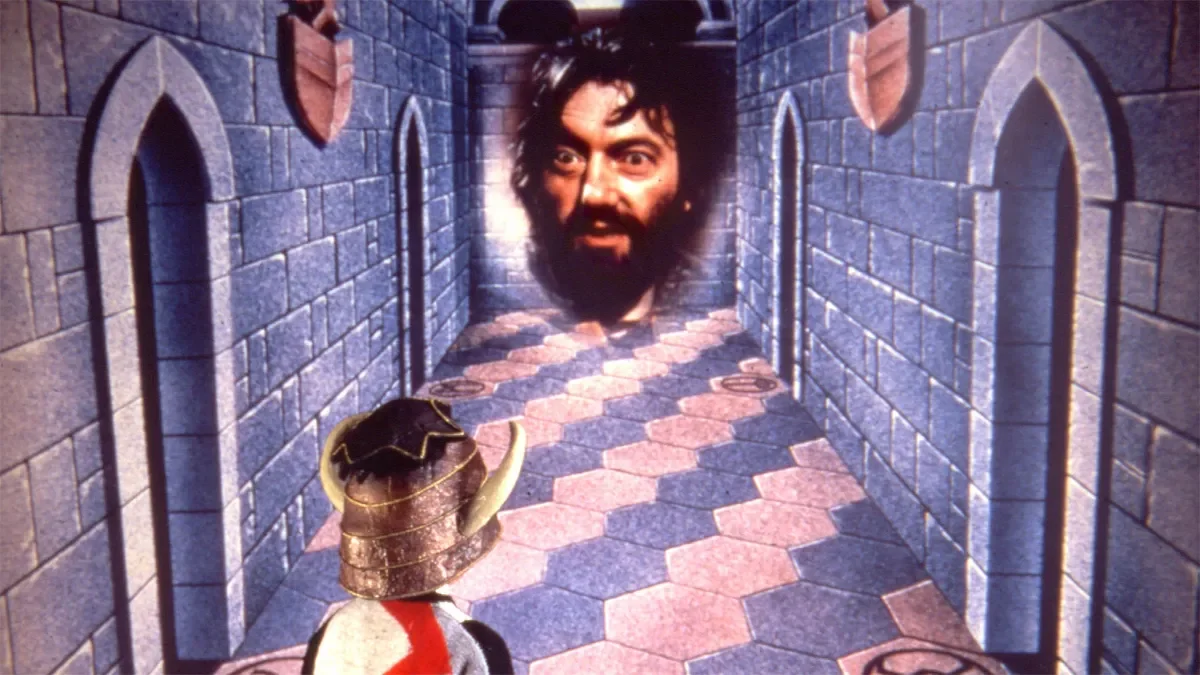
Knightmare was an absolutely huge part of my childhood. I first encountered the fantasy TV game show on CITV in 1988, following the launch of the second series. Knightmare took place in the dungeons beneath a medieval castle owned by a knight named Treguard. This bearded overseer was described as the 'Dungeon Master', a term I'd not really heard used much at the time. The dungeons under the castle seemed to occupy a slightly different dimension and were peopled by wizards, warriors, maids, jesters, goblins, dragons, gargoyles and ogres. The gameshow involved a team of four school children guiding one of their number through the various rooms (a series of beautifully illustrated backdrops) and 'levels' of the dungeon to win some mystical prize: a symbol of honour, the spurs of a knight or - later on - one of four artefacts: The Sword of Freedom, The Shield of Justice, The Cup That Heals or The Crowning Glory. The child moving around the dungeon wore an archaic, horned helmet that obscured their vision, so the remaining teammates would have to describe the environment in which their friend found themselves and attempt to navigate their way to the prize. Knightmare was a show millions of kids loved, and it ran for eight series between 1987 and 1994. Unfortunately, it peaked around the third series as a darker, more 'dungeon-based' challenge and quickly moved away from the older, more illustrated sets. As every new series developed more technology, a lot of the actual 'atmosphere' was lost and by the final series most of its audience had grown up and moved on from the show.
Nevertheless, Knightmare was something I never missed, and in 1988 on that weekend sleepover, Clive was telling me about a book based on the series. 'It's an adventure book,' he said, 'like those Fighting Fantasy ones my brother reads.'
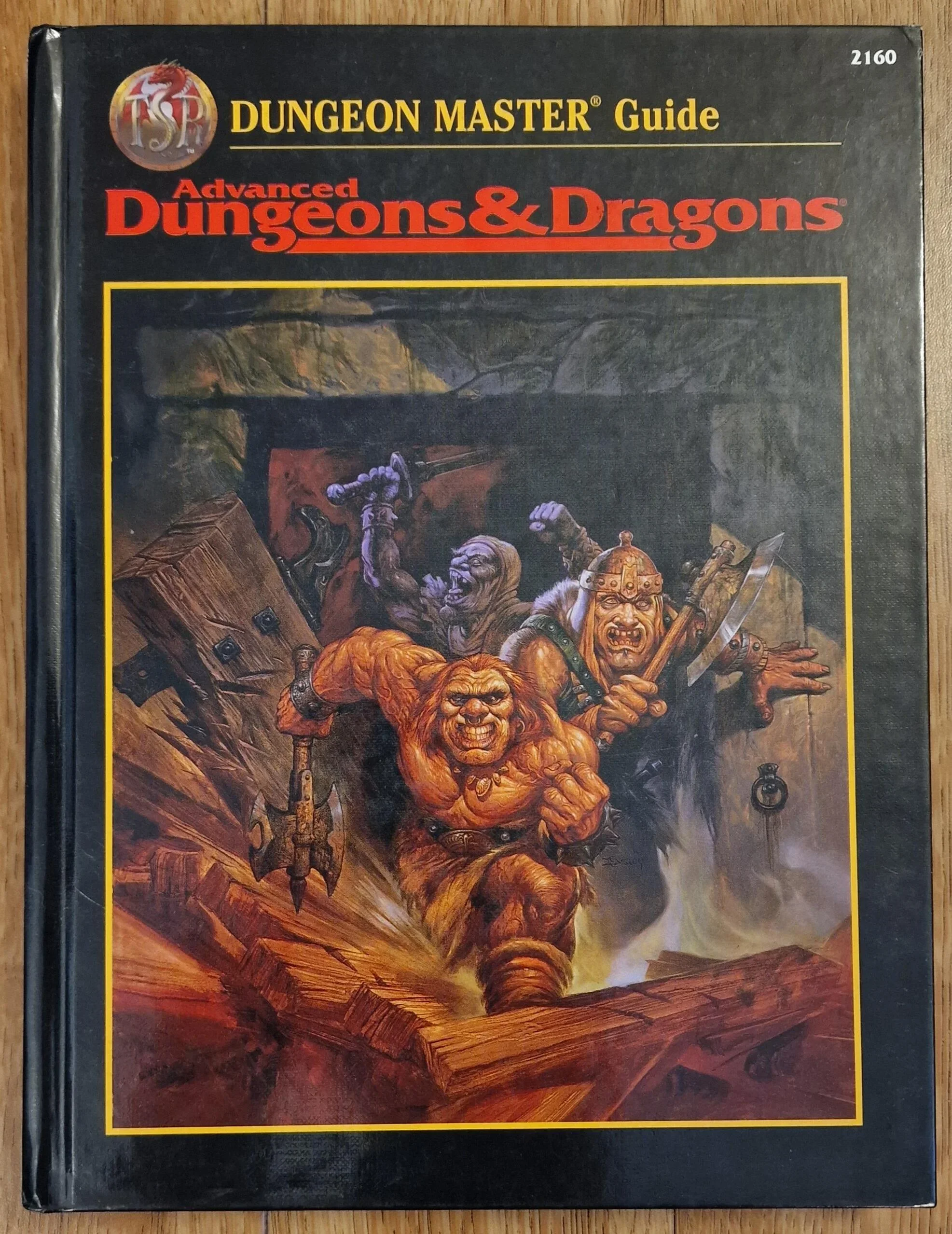
Fighting Fantasy. I'd literally never heard of it. The series of choose-your-own-adventure gamebooks, written by Games Workshop founders Steve Jackson and Ian Livingstone, was getting into its stride by 1988 and was already some twenty or so books strong. It was created as a sort of introductory game for Dungeons & Dragons, the enormously popular US-based RPG that had stormed across America and caused its fair share of chaos and controversy along the way. I've written an entire article about the effect discovering Fighting Fantasy had on me as a kid (read about it here), so I won't go into enormous detail; suffice to say that it started me reading, and for the next five years 'Fighting Fantasy' were literally the only books I was prepared to read. I even remember my mum buying around twenty of them as Christmas presents and hiding them all over the house so I'd need to find them on Christmas morning.
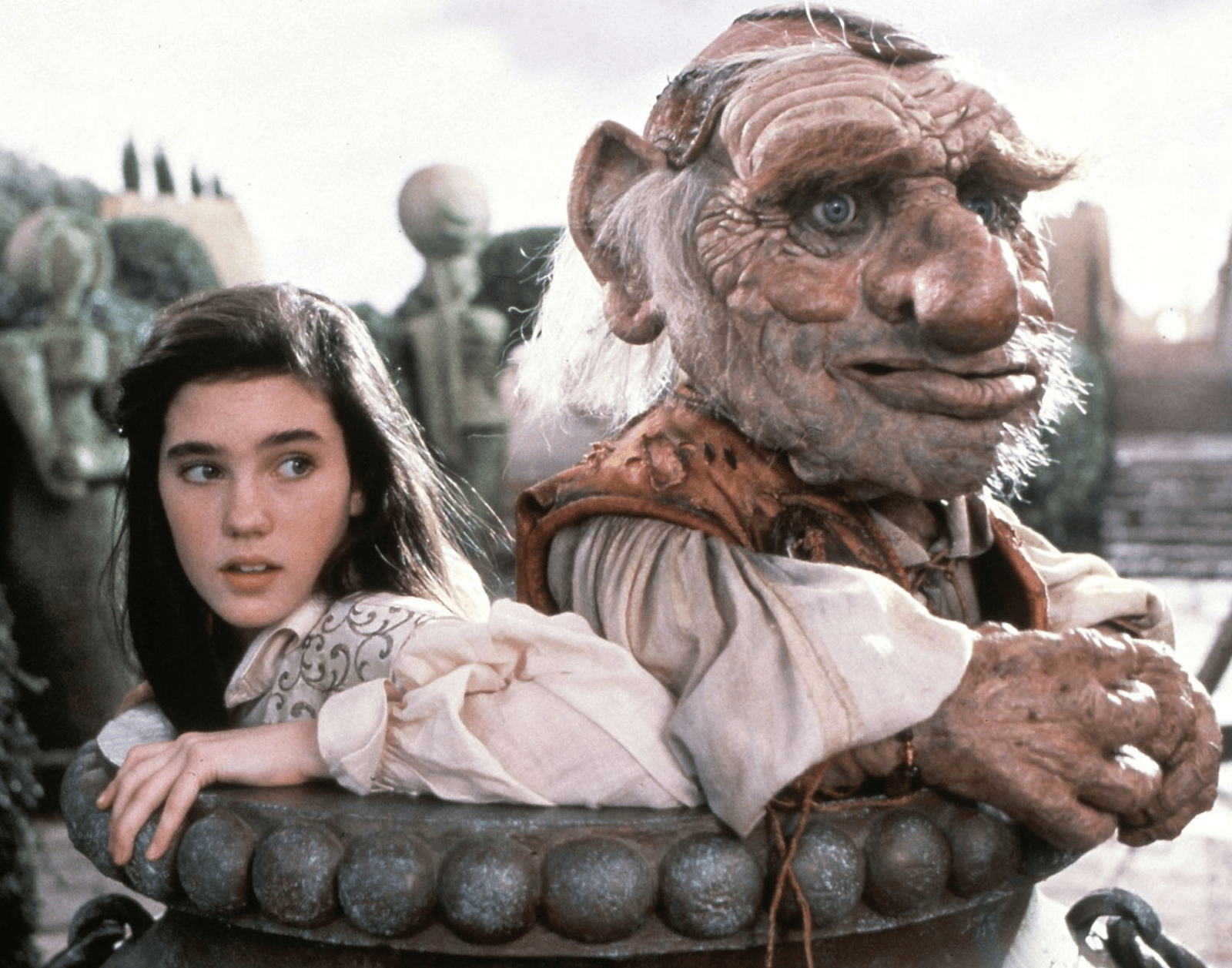
One of my biggest discoveries as a kid - and I still don’t really understand why it was so huge for me - happened just after my mum went into hospital for a hysterectomy. I remember that it was fast approaching Christmas and mum had been released from QEQM in Margate in order to recover at home. The recovery process was slow, and I distinctly recall her being in considerable pain: she would cry out from different rooms in the house and even experienced hallucinations at one point (from the medication) where she thought the living room floor was covered in books with snakes writhing in between them! It was a really difficult time, and my nan and I had been invited to a family party at the other end of town. I didn’t really get on that well with any of my cousins (no animosity, just distance), and I was a solitary kid. In any case, I didn’t want to play any of the games or socialise, so I found a small den room and switched on the TV, which is when I began to watch a film that - over the years - became so much more than a film to me. For some reason, I’d never heard of Jim Henson’s Labyrinth before: I’d never been a fan of The Muppets, and I thought of Henson as something of a joke puppeteer, a sort of background sidekick guy like Matthew Corbett was for Sooty. However, sitting there in that den room, I became absolutely lost in the world he’d created with legendary conceptual artist Brian Froud and Terry Jones of Monty Python (another huge discovery for me later in my teens).
It was around a year after discovering Fighting Fantasy that my cousin, Daryn, gave me my first computer: a Dragon 32. For a kid who spent so much of his life in the arcades (at Ramsgate Pleasurama, no less), I can’t even describe how amazing it was to have a computer at home. I had no great love for the games on the Dragon, but the computer itself was a gateway to a lifelong addiction, leading me to the two greatest machines I ever owned: the Commodore 64 and the Amiga A600. Entire weekends vanished as I made my way through Treasure Island Dizzy, Fantasy World Dizzy, Blagger, Friday 13th and - yes - even the infuriating C64 version of Knightmare (a hellish adventure puzzle game based on the TV series and one in which you were effectively stuck in one room for MONTHS). The A600 introduced me to games like Speedball 2: Brutal Deluxe, Cannon Fodder, Frontier: Elite 2 and - in 1991 and 1992, respectively - to the greatest games I’d ever played in my life: The Secret of Monkey Island and Monkey Island 2: Le Chuck’s Revenge. I still remember the absolute JOY of being entirely lost in the narrative of Guybrush Threepwood, the hapless young idiot who is so desperate to become a pirate that he ends up embroiled in a kidnap plot involving an evil ghost pirate and the love of his life: Melee Island governor, Elaine Marley. I remember crying with laughter at the jokes and being absolutely gobsmacked at the genius of the construction: I’d never played a point-and-click adventure game before Monkey Island, so the fact that you could leave a shop and the old man running the place would remember you when you came back in was - for me - just mindblowing. When I say I got lost in the world, I mean that I completely wanted it to be true - with every fibre of my being: I felt like I was there in the maze when Sarah met the worm, I believed in the substance of every brick in that wall and could visualise the distant sight of the castle and even feel the musty air in the goblin city on my face. I wanted the goblins to come and take me away right there and then…but they never did.
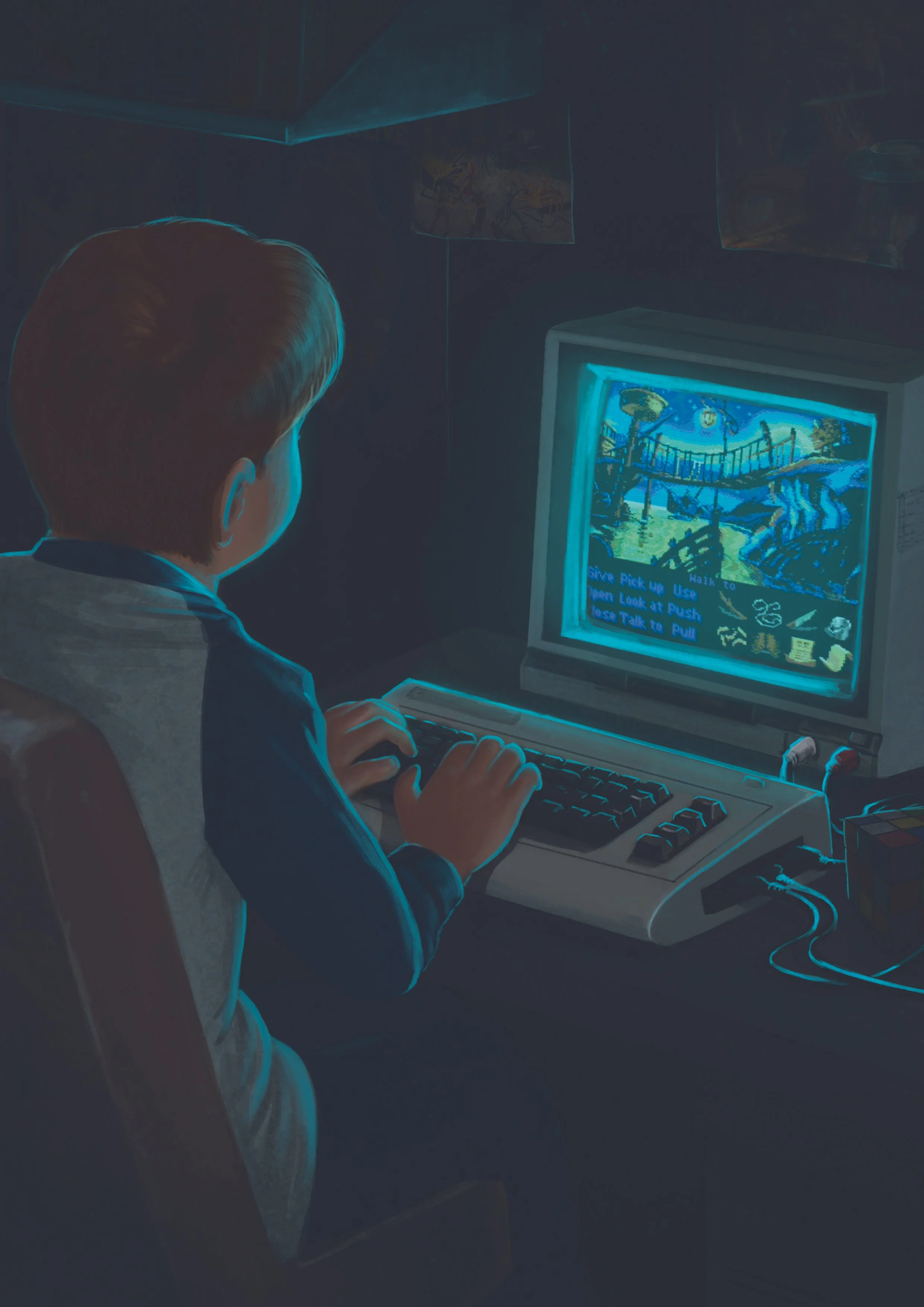
Monkey Island 2: Le Chuck’s Revenge (I had the game on the A600 - but the machine illustrated is a Commodore 64)
Artwork: Roman Dubina
It was my combined love for the Amiga and Fighting Fantasy books that probably led me to find the game that would completely swallow me up for an entire year: Eye of the Beholder 2: The Legend of Darkmoon. Although I didn’t actually understand at the time that I was effectively playing a solo version of the Dungeons & Dragons RPG, I was entirely lost in the mission to save the town of Waterdeep from the evil Dran Dragore and his temple of terror deep in the woods outside the town. Ah…they were great days. These games - along with the Advanced Fighting Fantasy system I tried with my school friends around 1993 - were probably the gateway to the RPG group I would end up forming as an adult in 2004 following a really enjoyable reunion meal that I organised at Posilippo in Broadstairs. We’ve remained friends to this day, though I seldom take part in the games myself: I’ve probably struggled to immerse myself in RPGs as I’ve got older!
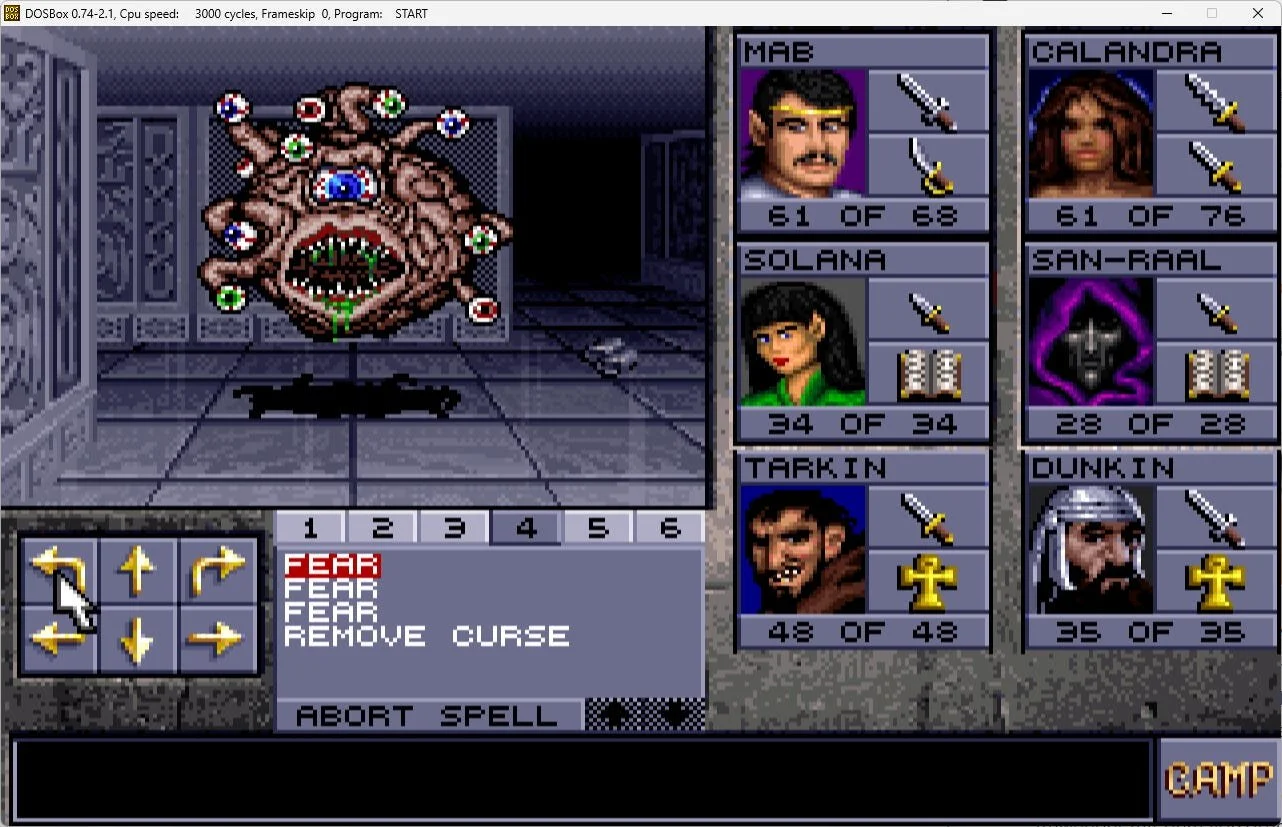
I even went back to play the first one and made a friend through the game when an older guy moved in down the street with the same computer and an identical taste in games! He would cook corned beef hash on a Saturday afternoon, and we’d spend hours trying to crack the traps and puzzles as we guided our adventure party through the dungeon.
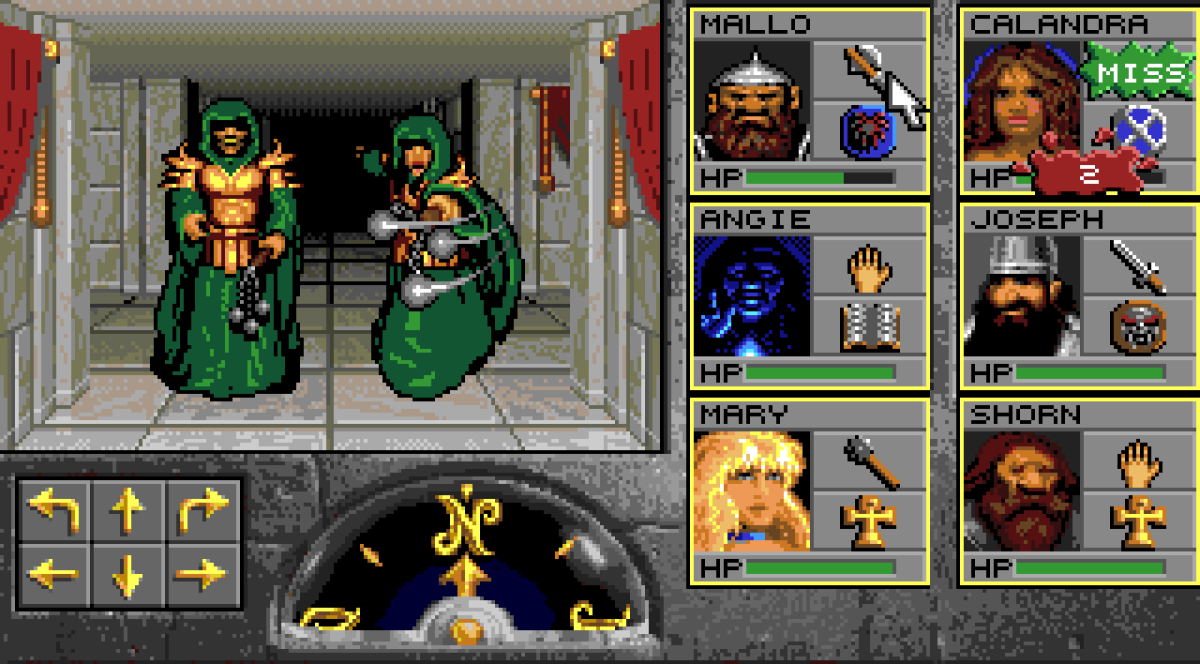
I’ve forgotten so many things over the years, but I will always remember Yop, Pod, Boris, Yid and the two in-game party members: Shorn and San-Raal (names that will be familiar to fans of the game).
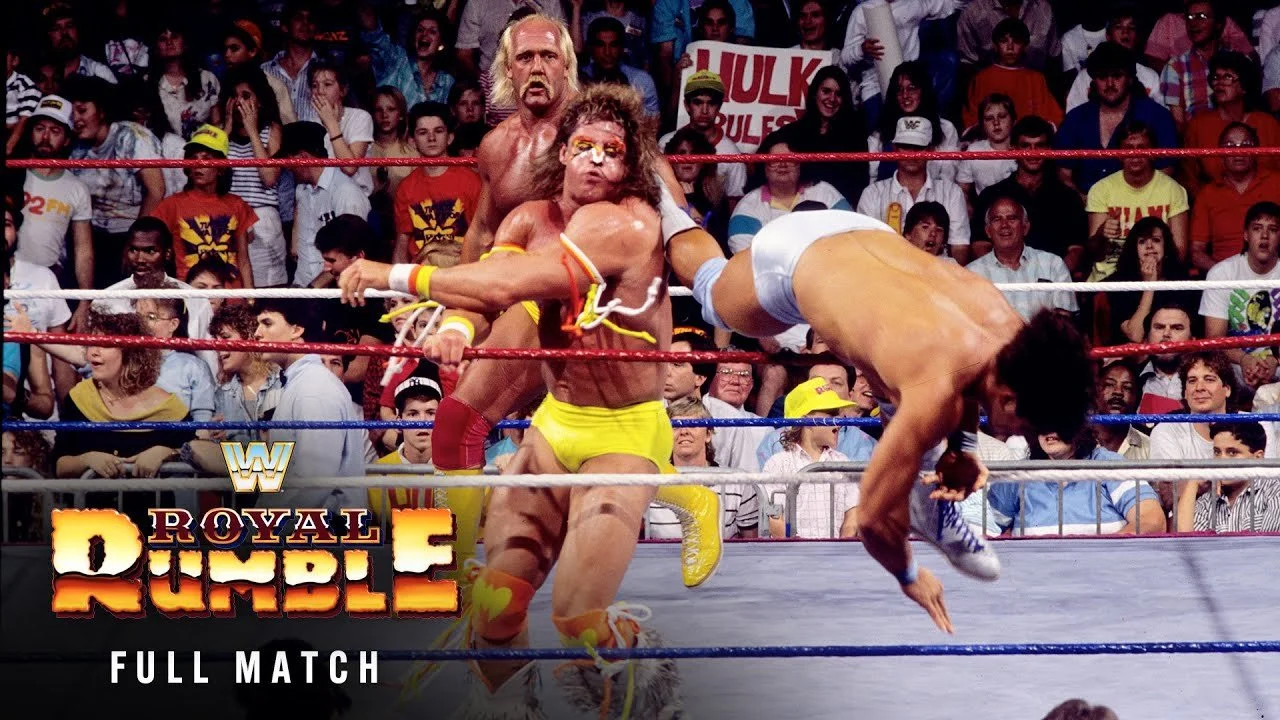
The last great obsession of my childhood came along in January 1990 when a boy from across the street asked me if I’d like to borrow his VHS recording of the 1990 WWF Royal Rumble. Not having a clue what he was talking about, I remember sitting glued to the screen as Hulk Hogan fought his way through the likes of The Ultimate Warrior, Randy Savage, The Million Dollar Man Ted DiBiase, Jake the Snake, Mr Perfect and more than twenty other wrestlers to win the event. It was my first taste of American wrestling, and I was absolutely hooked. I spent the next two years obsessively watching every Rumble, Wrestlemania, Summerslam and Survivor Series that I could get my hands on. I even managed to persuade my mum to talk my grandmother into allowing a Sky TV dish to be installed on the front of the house (something she was borderline phobic about agreeing to). Between 1990 and 1992, I watched every pay-per-view event and followed each storyline as it was the world’s greatest soap opera, which - in many ways - it was. It certainly helped me escape from a lot of the bullying, low moods and mental torment I experienced as a teenager.
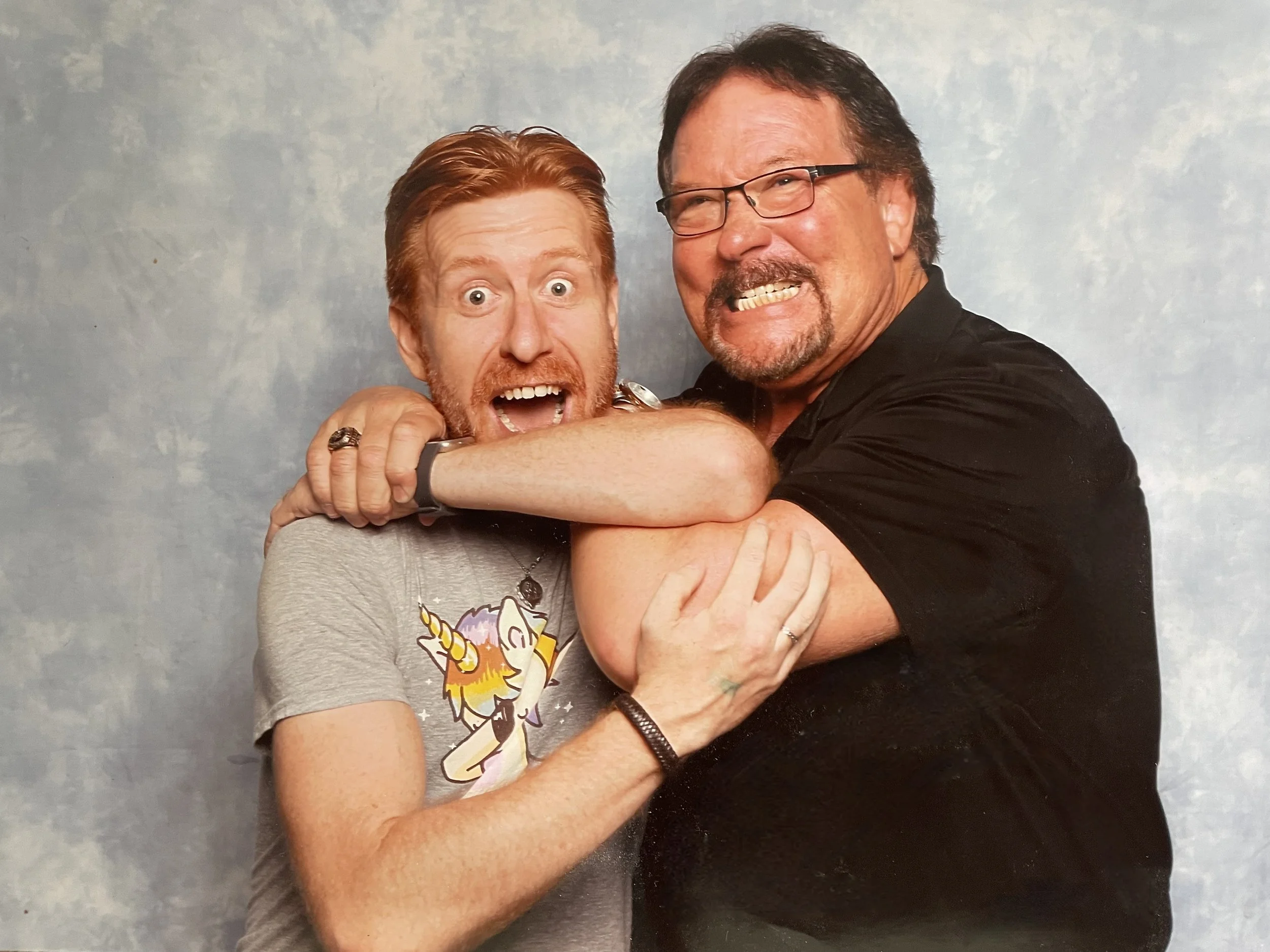
Many years after I saw that first Royal Rumble, I eventually got to meet the No.1 entrant - The Million Dollar Man - who kindly put me in his finishing hold at a convention!
